
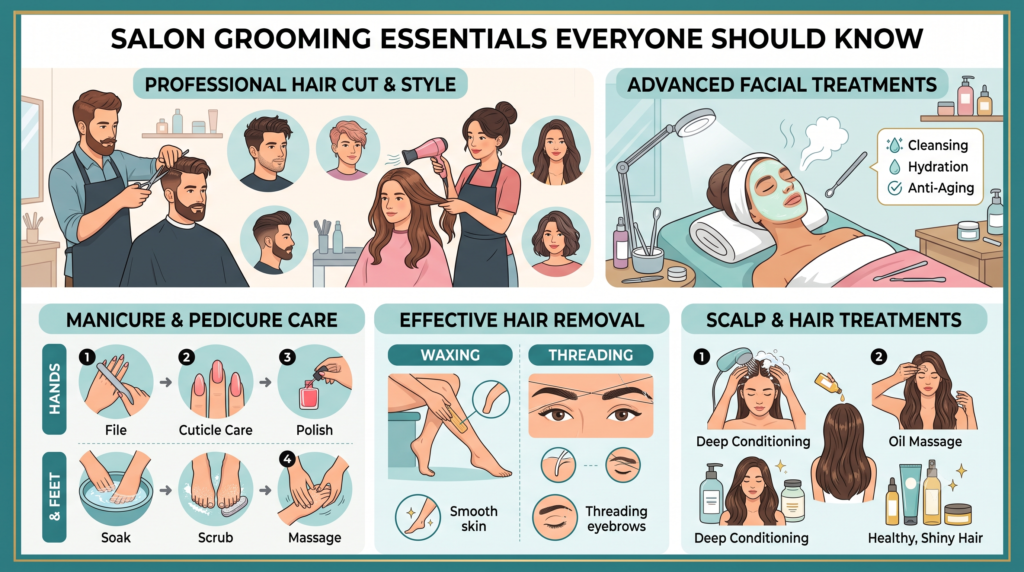
Salon Grooming Essentials Everyone Should Know: 15 Powerful Tips
Looking good isn’t only about following the latest beauty trend. It’s about maintaining healthy hair, clean skin, neat nails, and a personal style that suits you. That’s where salon grooming essentials come into play.
Professional grooming can make a noticeable difference in your appearance and confidence. Whether you’re preparing for an important meeting, a wedding, a birthday celebration, a date, or simply your regular week, a proper grooming routine helps you feel fresh and put together.
However, grooming isn’t a one-size-fits-all process. Your hair texture, skin type, lifestyle, age, personal preferences, and daily routine all influence the services and products that may work for you.
In this guide, we’ll explore 15 practical salon grooming essentials that everyone should know. We’ll also discuss haircuts, skincare, scalp care, beard grooming, nails, professional treatments, salon hygiene, and ways to maintain your look between appointments.
Why Salon Grooming Essentials Matter
Personal grooming is an important part of everyday self-care. A well-maintained appearance can help you feel more comfortable and confident in social and professional situations.
Regular salon visits aren’t necessarily about dramatic transformations. In many cases, they’re about maintenance.
A haircut can keep your hairstyle structured. A professional hair treatment may help manage certain hair concerns. Nail grooming keeps hands looking neat, while basic skincare can help maintain clean and healthy-looking skin.
The key is consistency.
Instead of waiting until your hair becomes difficult to manage or your nails become overgrown, regular maintenance can make grooming easier. It’s a bit like servicing a car: small, regular attention can help prevent bigger maintenance problems.
Understanding Personal Grooming
Personal grooming includes the habits and professional services used to maintain your appearance and hygiene.
It can include:
- Haircuts and hairstyling
- Hair washing and conditioning
- Scalp care
- Beard trimming
- Facial grooming
- Skincare
- Facials
- Manicures and pedicures
- Nail extensions and nail art
- Hair colouring
- Hair treatments
- Makeup for special occasions
- General hygiene and self-care
The right combination depends on the individual.
A person with curly hair may need a different haircut and styling approach than someone with straight hair. Similarly, someone with oily skin may require a different skincare routine from someone with dry skin.
Grooming and Self-Confidence
A fresh haircut, clean skin, and well-maintained nails can contribute to a more polished appearance. More importantly, grooming can help people feel comfortable in their own appearance.
Confidence doesn’t require following every trend. In fact, understanding what suits you is often more useful than copying someone else’s style.
Grooming and Professional Appearance
Your appearance can also form part of your professional presentation.
A neat hairstyle, clean beard, tidy nails, and appropriate skincare routine can create a well-groomed appearance in workplaces where personal presentation matters.
That doesn’t mean everyone needs the same style. Professional grooming should still allow room for individual preferences and cultural or workplace expectations.
15 Salon Grooming Essentials Everyone Should Know
Now let’s look at the most useful grooming essentials in detail.
1. Know Your Hair Type
Understanding your hair is one of the first steps toward better grooming.
Hair can differ in texture, density, thickness, porosity, and natural pattern. Some people have straight hair, while others have wavy, curly, or tightly coiled hair.
Your hair type can influence:
- Haircut selection
- Shampoo choice
- Conditioning routine
- Styling products
- Hair treatment selection
- Blow-drying methods
- Frequency of salon visits
For example, someone with dry or textured hair may need more attention to moisture and conditioning, while fine hair may require lightweight products that don’t create unnecessary buildup.
A professional stylist can examine your hair and recommend a suitable routine based on its condition and your styling goals.
2. Choose the Right Haircut
A haircut should work with your hair, face shape, lifestyle, and maintenance preferences.
A trendy haircut isn’t automatically the right haircut for everyone.
Before getting a major change, consider how much time you’re willing to spend styling your hair each morning. A highly structured haircut may require frequent salon visits, while a simpler style may be easier to maintain.
During your consultation, explain what you like and what you don’t like. You can also bring reference photographs, but remember that your hair texture may produce a different result.
A good stylist will adapt the idea rather than simply copy the photograph.
3. Maintain a Healthy Scalp
Healthy-looking hair starts with the scalp.
A proper scalp routine includes regular cleansing, appropriate conditioning, and avoiding excessive product buildup.
If you notice persistent itching, significant flaking, redness, pain, or unusual hair loss, it’s better to consult an appropriate healthcare professional rather than relying only on salon treatments.
For general information about scalp and hair concerns, the American Academy of Dermatology’s hair and scalp resources can be a useful reference.
Salon professionals can help with cosmetic hair and scalp care, but medical scalp conditions may require professional medical evaluation.
4. Don’t Ignore Hair Conditioning
Shampoo cleans the hair, while conditioner helps improve manageability and softness.
Skipping conditioner regularly can leave some hair types feeling dry or difficult to style.
The ideal conditioning routine depends on your hair type. Fine hair may benefit from lighter products, while thicker or chemically treated hair may require richer conditioning.
Professional conditioning treatments can also be considered when your stylist identifies a specific cosmetic need.
Remember, though, that a salon treatment isn’t a substitute for everyday hair care.
5. Keep Facial Hair Well Groomed
For people who have facial hair, beard and moustache grooming can significantly influence overall appearance.
Regular trimming can maintain shape and remove uneven growth. The neckline and cheek area can also be cleaned up according to the desired style.
Common beard grooming services include:
- Beard trimming
- Beard shaping
- Moustache trimming
- Beard styling
- Hot towel grooming
- Facial cleansing
The important thing is to choose a shape that fits your preferred appearance and maintenance routine.
6. Build a Simple Skincare Routine
Skincare doesn’t have to involve a shelf full of products.
A simple routine may include cleansing, moisturizing, and appropriate daytime sun protection.
Your routine should consider your skin type and individual needs.
Overusing multiple active products can sometimes irritate the skin. That’s why it’s useful to understand what each product is intended to do before adding it to your routine.
Professional salon facials can provide cosmetic cleansing and skin-care experiences, but they should complement—not replace—appropriate daily skincare.
7. Understand Facial Treatments
Facials come in many forms, including cleansing facials, hydrating facials, brightening treatments, and other cosmetic services.
Before choosing a facial, ask what the treatment is designed to address.
For example:
| Goal | Treatment Consideration |
|---|---|
| General cleansing | Basic cleansing facial |
| Hydration | Hydrating facial |
| Relaxation | Massage-focused facial |
| Event preparation | Gentle professional facial |
| Dull-looking skin | Brightening-focused treatment |
| Sensitive skin | Gentle products and professional consultation |
If you have sensitive skin or a known skin condition, tell the salon professional before the treatment.
A patch test may also be appropriate for certain products or procedures.
8. Keep Hands and Nails Clean
Nail grooming is an easy way to improve your overall appearance.
Well-maintained nails don’t necessarily mean elaborate nail art. Clean, neatly shaped nails can look polished on their own.
Salon nail services can include:
- Manicure
- Pedicure
- Nail shaping
- Cuticle care
- Nail extensions
- Gel services
- Nail art
If you choose extensions or other long-lasting nail services, proper maintenance is important. Avoid forcefully removing enhancements because this can damage the natural nail.
9. Choose Professional Hair Treatments Carefully
Modern salons offer many hair services, including keratin treatments, smoothening, hair botox, colouring, highlights, and other chemical services.
These services can change the appearance and manageability of hair, but they’re not identical.
Before choosing a treatment, discuss:
- Current hair condition
- Previous chemical treatments
- Hair colour history
- Desired result
- Maintenance requirements
- Potential need for aftercare
Don’t choose a treatment simply because it’s popular on social media.
The right service depends on your individual hair condition and desired outcome.
10. Pay Attention to Hygiene
Salon hygiene is one of the most important grooming essentials.
A professional salon should maintain appropriate cleanliness across workstations, tools, towels, treatment areas, and other equipment.
Customers can also help by asking questions when they’re unsure about hygiene practices.
Pay attention to whether:
- Workstations are cleaned between clients.
- Reusable tools are appropriately cleaned and disinfected.
- Fresh towels are used.
- Products are handled hygienically.
- Nail tools are appropriately maintained.
- Staff follow basic hygiene practices.
Clean surroundings are part of a professional salon experience.
11. Groom According to Your Lifestyle
Your grooming routine should fit your real life.
If you’re busy every morning, a low-maintenance haircut may be more practical than a style requiring extensive daily styling.
If you’re active or frequently outdoors, you may need a simple routine that’s easy to maintain.
If your job involves frequent meetings or public interaction, you may prefer regular haircut and beard-maintenance appointments.
The best routine is often the one you can realistically follow.
12. Prepare Before a Special Event
Weddings, birthdays, festivals, parties, interviews, and photoshoots often require additional grooming.
However, don’t necessarily experiment with a completely new treatment immediately before an important event.
A better approach is to plan ahead.
For example:
One to two weeks before:
Consider haircut planning, hair treatments, and any major grooming changes.
A few days before:
Schedule maintenance services such as trimming, manicure, or basic facial care.
One day before:
Keep your routine simple and avoid unnecessary experimentation.
On the day:
Focus on styling and finishing touches.
This gives you time to address unexpected results before the event.
13. Follow a Regular Grooming Schedule
Consistency is one of the most useful salon grooming essentials.
Your schedule doesn’t need to be complicated.
For example:
| Service | General Maintenance Approach |
|---|---|
| Haircut | Based on growth and preferred style |
| Beard trim | As needed for desired shape |
| Manicure | Based on nail growth and preference |
| Pedicure | Based on personal needs |
| Hair treatment | According to hair condition and professional advice |
| Facial | Based on skin needs and salon recommendation |
| Hair colour | According to regrowth and colour goals |
These aren’t fixed medical or universal intervals. Your stylist or beauty professional can help determine what works for you.
14. Communicate With Your Stylist
Good communication can make a salon appointment much more successful.
Don’t be afraid to explain what you want.
Tell your stylist:
- How short you want the haircut.
- Whether you style your hair daily.
- What products you currently use.
- Whether you’ve recently coloured your hair.
- Whether you’ve had chemical treatments.
- What you liked or disliked about your previous haircut.
If you’re unsure, ask questions.
A professional consultation isn’t just small talk. It’s an opportunity to make the service more suitable for you.
15. Use Quality Grooming Products
Professional grooming doesn’t end when you leave the salon.
The products you use at home can affect how easily you maintain your look.
Instead of buying a product simply because it’s trending, consider whether it’s suitable for your hair or skin.
Look at:
- Ingredients
- Product purpose
- Hair or skin type
- Usage instructions
- Professional recommendations
- Your own experience with the product
More expensive doesn’t always mean better. The right product is the one that’s appropriate for your specific needs and used correctly.
Salon Grooming Essentials for Men and Women
Grooming is increasingly personal and individual.
Men may focus on haircuts, beard grooming, skincare, facials, scalp treatments, and manicures. Women may choose haircuts, colouring, styling, facials, manicures, pedicures, makeup, and hair treatments.
But these services aren’t restricted by gender.
Anyone can choose the grooming services that fit their personal style, lifestyle, and needs.
A modern unisex salon should therefore provide consultation-driven services rather than assuming what a customer needs based only on gender.
How to Choose the Right Salon
Choosing a salon is an important part of maintaining your grooming routine.
Start by checking the salon’s services and professional experience.
Look for a salon that:
- Maintains clean work areas.
- Provides clear service information.
- Has trained professionals.
- Listens to customer requirements.
- Explains treatments before starting.
- Uses suitable products.
- Maintains professional hygiene standards.
- Provides transparent pricing where possible.
- Has genuine customer feedback.
Online reviews can be useful, but don’t rely on one review alone. Look for patterns across multiple customer experiences.
You can also visit the salon before booking a major service. A short consultation can tell you a lot about communication, cleanliness, and professionalism.
Common Grooming Mistakes to Avoid
Even a good grooming routine can go wrong when basic mistakes are repeated.
Changing Hairstyles Too Frequently
Constantly changing your haircut can make it difficult to understand what actually suits your hair and lifestyle.
Using Too Many Products
More products don’t automatically create better results. Too much product can cause buildup and make hair feel heavy.
Ignoring Aftercare
Professional treatments often come with specific aftercare recommendations. Ignoring them can make maintenance harder.
Copying Every Trend
A hairstyle or skincare trend may look great on someone else but may not fit your hair type, skin type, or lifestyle.
Skipping Consultations
If you’re getting a major haircut, colour, or chemical treatment, communication matters.
Waiting Until the Last Minute
Trying a new treatment hours before a major event can create unnecessary stress. Plan ahead.
Neglecting Hygiene
Clean tools, towels, workstations, and hands are fundamental to a professional salon environment.
Salon Grooming Essentials at Home
Salon appointments work best when supported by good home care.
Create a simple routine that you can actually maintain.
For hair, use products appropriate for your hair type and follow your stylist’s recommendations. Avoid excessive heat styling when possible and use appropriate heat-protection products when using hot tools.
For skin, keep your routine simple and consistent. Cleansing, moisturizing, and suitable daytime sun protection can form the foundation of basic skincare.
For nails, keep them clean and avoid picking or forcefully removing enhancements.
For facial hair, regular trimming can help maintain shape between professional appointments.
Most importantly, pay attention to how your hair and skin respond to products. If something consistently causes irritation or discomfort, stop using it and seek appropriate professional advice.
Quick Salon Grooming Checklist
Before your next salon appointment, consider this checklist:
- Do I know what result I want?
- Have I explained my hair history?
- Do I know my hair type?
- Have I mentioned previous chemical treatments?
- Have I explained any relevant skin sensitivity?
- Have I discussed maintenance requirements?
- Have I asked about aftercare?
- Is the salon maintaining good hygiene?
- Am I choosing a service based on my needs rather than a trend?
- Do I have enough time before an important event?
This simple checklist can make your salon experience more organized and predictable.
Frequently Asked Questions
What are the most important salon grooming essentials?
The most important essentials include regular hair maintenance, scalp care, suitable skincare, facial hair grooming, nail care, proper hygiene, professional consultations, and appropriate home aftercare.
How often should I visit a salon?
There isn’t one schedule that works for everyone. Hair growth, hairstyle, beard growth, treatments, nail services, and personal preferences all influence how frequently you need professional grooming.
What should I tell my stylist before a hair treatment?
Tell your stylist about your current hair condition, previous colour, chemical treatments, recent services, allergies or sensitivities relevant to the service, and the result you want.
Are salon facials suitable for everyone?
Facials vary considerably. People with sensitive skin or existing skin concerns should discuss these with a qualified professional before treatment. A salon professional can explain the cosmetic service, while persistent or medical skin concerns may require a dermatologist.
Should men follow a skincare routine?
Yes. Skincare isn’t limited to one gender. A basic routine can include cleansing, moisturizing, and appropriate sun protection, depending on individual skin needs.
How can I maintain my salon hairstyle at home?
Use suitable styling and care products, follow your stylist’s instructions, avoid unnecessary heat or chemical exposure, and schedule maintenance appointments according to your haircut and hair growth.
Is it better to follow trends or choose a classic hairstyle?
The choice depends on personal preference. Trends can provide inspiration, while classic styles may be easier for some people to maintain. Your hair type, lifestyle, and desired maintenance level should also be considered.
What should I check before choosing a salon?
Consider cleanliness, professional experience, services offered, customer communication, product quality, reviews, pricing information, and whether the salon understands your specific requirements.
How can I prepare for a salon appointment?
Know what service you want, collect reference photos if helpful, explain your previous treatments, discuss your expectations, and ask about maintenance and aftercare.
Can salon grooming improve confidence?
Grooming can help people feel more comfortable and polished in their appearance. However, confidence is personal and isn’t dependent on meeting a particular beauty standard.
Conclusion
Good grooming isn’t about perfection. It’s about consistent care, personal style, hygiene, and choosing services that suit your individual needs.
These salon grooming essentials can help you make more informed decisions about haircuts, hair treatments, skincare, beard grooming, nails, and salon maintenance.
The most useful approach is simple: understand your hair and skin, communicate clearly with your stylist, choose appropriate services, maintain good hygiene, and follow practical aftercare at home.
Whether you’re maintaining your everyday appearance or preparing for a special occasion, professional grooming can become a valuable part of your self-care routine.
After all, when you understand what your hair, skin, and personal style actually need, salon visits become more than routine appointments—they become a practical part of looking and feeling your best.