
Why Skin Preparation Matters Before Bridal Makeup
Your wedding day is one of those occasions when every detail matters. From your outfit and hairstyle to your jewelry and makeup, everything comes together to create your bridal look. But there’s one important part of the process that shouldn’t be overlooked: your skin.
A good Bridal Makeup Guide doesn’t begin when the makeup artist opens the foundation bottle. It starts weeks or even months before the wedding.
Healthy-looking skin gives bridal makeup a smoother canvas. When the skin is properly cleansed, moisturized, and protected, makeup can sit more comfortably and appear more natural. On the other hand, excessively dry, irritated, or poorly hydrated skin can make foundation look patchy or emphasize flaky areas.
The goal isn’t to completely change your skin before the wedding. Instead, focus on creating a simple, consistent routine that supports your skin’s natural appearance.
Dermatologists commonly recommend a basic routine built around gentle cleansing, moisturizing, and sun protection. The American Academy of Dermatology also advises choosing products according to your skin type and avoiding unnecessarily complicated routines that can cause irritation.
So, if you’re preparing for your wedding, don’t wait until the last week. A little planning can go a long way.
Start Your Bridal Skincare Routine Early
One of the biggest bridal beauty mistakes is starting everything at the last minute.
You may be tempted to try a new facial, serum, peel, scrub, or home remedy just days before your wedding. However, introducing multiple new products close to the big day can increase the chance of irritation or an unexpected reaction.
Instead, start with the basics.
Your everyday bridal skincare routine can include:
- A gentle cleanser
- A suitable moisturizer
- Broad-spectrum sunscreen
- A targeted product for a specific skin concern, if needed
- Adequate hydration
- Consistent sleep and balanced nutrition
The American Academy of Dermatology recommends gentle, non-abrasive cleansing and warns against aggressive scrubbing because it can irritate the skin.
1. Know Your Skin Type
Before buying skincare products, understand your skin.
Your skin may be:
- Normal: Generally balanced and comfortable
- Dry: Often feels tight, rough, or flaky
- Oily: Produces more oil and may appear shiny
- Combination: Oily in some areas and dry in others
- Sensitive: Easily becomes irritated, red, itchy, or uncomfortable
Your skin type can change with weather, hormones, stress, age, and skincare habits. Therefore, don’t automatically copy someone else’s routine simply because it worked for them.
For example, a rich cream may feel wonderful on dry skin but may feel too heavy for someone with oily skin. Likewise, a strong exfoliating product that works for one person may irritate another.
2. Build a Simple Cleansing Routine
Clean skin is the first step toward a polished makeup application.
Choose a gentle cleanser appropriate for your skin type. Avoid harsh scrubbing, extremely hot water, and aggressive cleansing.
A simple routine can be:
Morning:
Cleanse → Moisturize → Sunscreen
Evening:
Cleanse → Treatment, if appropriate → Moisturize
The AAD recommends using a gentle, non-abrasive cleanser, rinsing with lukewarm water, and avoiding scrubbing.
3. Keep Your Skin Properly Hydrated
Hydrated skin often looks smoother and more comfortable under makeup.
This doesn’t mean drinking huge amounts of water overnight or applying several layers of products. Instead, maintain a consistent skincare routine and use a moisturizer suited to your skin type.
For dry skin, a richer cream may be useful. For oily skin, a lightweight gel or non-comedogenic moisturizer may be more comfortable.
Dermatologists note that moisturizer helps trap water in the skin and can be selected according to individual skin type.
4. Never Skip Sunscreen
Sun protection is an important part of bridal skincare.
Regular sun exposure can contribute to sunburn, premature skin aging, and pigmentation concerns. The AAD recommends broad-spectrum, water-resistant sunscreen with SPF 30 or higher.
Apply sunscreen as the final skincare step before makeup when you’re going outdoors.
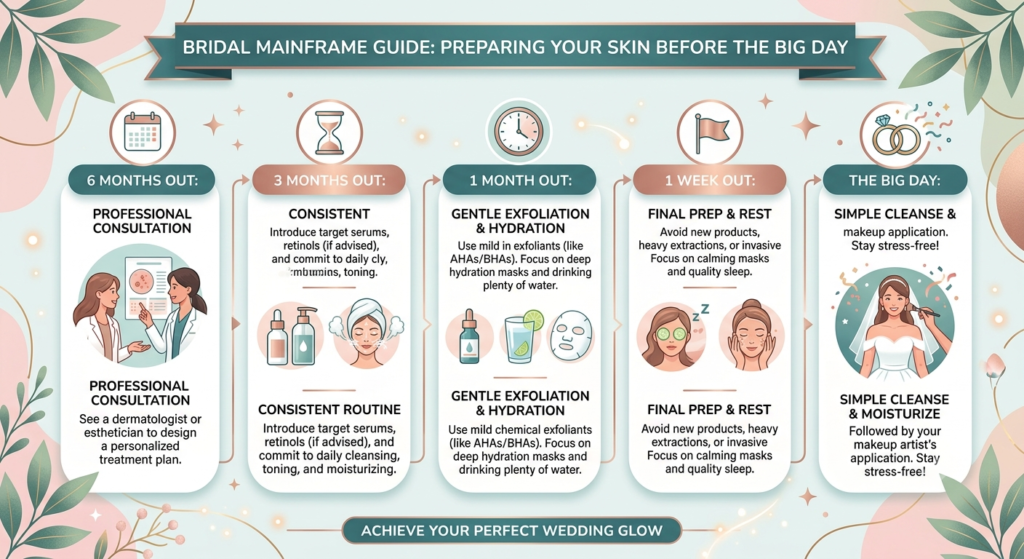
Bridal Skincare Timeline
The best bridal skincare routine isn’t about doing everything at once. It’s about doing the right things at the right time.
Here’s a practical timeline.
3–6 Months Before the Wedding
This is an excellent time to establish your routine.
Focus on:
- Understanding your skin type
- Creating a basic skincare routine
- Addressing dryness or excessive oiliness
- Maintaining daily sunscreen use
- Consulting a dermatologist if you have persistent acne, pigmentation, or another skin concern
- Planning professional facials or treatments with qualified professionals
- Avoiding unnecessary product experimentation
If you already have a skincare routine that works, there’s usually no reason to completely replace it.
Consistency is your friend.
1–2 Months Before the Wedding
At this stage, focus on maintaining your routine.
You can consider professional skincare services if they’re suitable for your skin and scheduled with enough time for recovery.
If you’re considering a facial, discuss your skin type, previous reactions, current products, and wedding date with the professional performing the treatment.
Don’t assume that a more aggressive treatment will automatically produce better results.
2 Weeks Before the Wedding
Now is the time to keep things predictable.
Avoid introducing several new products.
Continue:
- Gentle cleansing
- Moisturizing
- Sunscreen
- Your established skincare routine
- Adequate rest
- Regular meals and hydration
If you normally get professional skincare treatments, follow a schedule recommended by your skincare professional.
The Final 7 Days
Keep it simple.
Your goal now is not to experiment. It’s to maintain calm, comfortable skin.
Avoid:
- New skincare products
- Aggressive scrubs
- Unplanned chemical treatments
- Picking pimples
- Excessive exfoliation
- DIY treatments that you haven’t tested before
Think of the final week as your skin-protection week.
How to Prepare Different Skin Types
There isn’t a universal bridal skincare routine. Your routine should be based on what your skin actually needs.
Dry Skin
Dry skin can make foundation appear flaky or uneven.
Focus on:
- Gentle cleansing
- Consistent moisturizing
- Avoiding harsh scrubs
- Applying moisturizer while skin is slightly damp
- Using products designed for dry skin
The AAD recommends moisturizing immediately after washing or bathing to help retain moisture.
On the wedding day, your makeup artist can also select suitable hydrating and complexion-prep products based on your skin.
Oily Skin
Oily skin doesn’t mean you should stop moisturizing.
A lightweight, non-comedogenic moisturizer can still be useful. The AAD specifically notes that people with oily skin should moisturize and may prefer lightweight products.
Your routine can include:
- Gentle cleanser
- Lightweight moisturizer
- Sunscreen
- Suitable makeup primer before foundation
Avoid repeatedly stripping your skin with harsh cleansers. Over-cleansing can irritate the skin.
Combination Skin
Combination skin requires balance.
You may notice oiliness around your forehead, nose, and chin while your cheeks feel dry.
Instead of treating your entire face exactly the same way, consider using different textures in different areas.
For example:
- Lightweight moisturizer on oily areas
- More hydrating moisturizer on dry areas
- Gentle cleanser across the face
- Suitable sunscreen for the entire exposed area
Sensitive Skin
If your skin is sensitive, simplicity is especially important.
Choose gentle products and avoid unnecessary fragrance or harsh ingredients if they tend to irritate your skin.
Don’t suddenly start an aggressive skincare routine before the wedding.
If you experience persistent redness, burning, swelling, severe acne, or another concerning reaction, speak with a qualified dermatologist.
Exfoliation Before Bridal Makeup
Exfoliation can remove dead skin cells and help create a smoother-feeling surface, but more isn’t always better.
Over-exfoliation can lead to irritation, dryness, redness, and discomfort.
If exfoliation is already part of your established routine, continue only at a frequency that your skin tolerates well.
Don’t suddenly use a strong exfoliating product because you have seen a viral bridal skincare tip online.
Remember this simple rule:
Your wedding isn’t the time to experiment with your skin.
The AAD notes that excessive use of skincare products can irritate the skin, and recommends keeping routines appropriate to individual needs.
Facials and Professional Skin Treatments
Professional facials can be part of a bridal beauty plan, but timing matters.
If you’re planning a facial, discuss your wedding date with your skincare professional. Different treatments may have different recovery periods.
A professional can help you determine whether a particular treatment is suitable for your skin.
Depending on your needs, a bridal beauty plan may include services such as:
- Hydrating facial
- Deep-cleansing facial
- Gentle exfoliation
- Skin polishing
- Customized skincare treatments
- Professional makeup preparation
However, avoid choosing a treatment simply because it is popular.
Your friend’s skin isn’t your skin.
If you have acne, persistent pigmentation, significant sensitivity, or another skin condition, a dermatologist may be more appropriate than experimenting with salon treatments.
For general dermatologist-backed skincare information, you can also explore the American Academy of Dermatology skincare guide.
What to Avoid Before Your Wedding
Knowing what not to do is just as important as knowing what to do.
Avoid Last-Minute Product Changes
Trying a new serum two days before the wedding isn’t a great idea.
Even products marketed as gentle can cause reactions in some people.
Avoid Excessive Scrubbing
Scrubbing aggressively doesn’t guarantee glowing skin.
In fact, it can irritate the skin.
Avoid Picking Pimples
It can be tempting, especially when a breakout appears before an important event.
However, squeezing or picking can make inflammation worse and may increase the chance of marks.
Avoid Unplanned Chemical Treatments
Don’t schedule an unfamiliar peel or intensive treatment immediately before the wedding without professional guidance.
Avoid Sleeping With Makeup
Always remove makeup before going to bed.
The AAD recommends removing makeup before sleep, particularly for people prone to oily or acne-prone skin.
Avoid Copying Someone Else’s Routine
A skincare routine should be personal.
What works beautifully for one bride may not work for another.
Bridal Makeup Preparation on the Wedding Day
The wedding morning can be hectic.
You’ve got your outfit, jewelry, hair, makeup, photography, family, and probably a dozen people asking where something is!
That’s why your skincare preparation should be simple.
Morning Routine
Start with a gentle cleanse if that is part of your normal routine.
Then:
- Cleanse gently.
- Apply your usual skincare treatment if appropriate.
- Apply moisturizer suited to your skin.
- Apply sunscreen if you’ll be exposed to daylight.
- Allow skincare products time to settle.
- Let your makeup artist begin the makeup process.
Don’t overload your skin with multiple creams and serums right before makeup.
Communicate With Your Makeup Artist
Tell your makeup artist about:
- Your skin type
- Any known sensitivities
- Products you’ve recently used
- Areas that become oily
- Areas that become dry
- Previous reactions to cosmetics
Good communication helps the makeup artist plan the complexion routine more effectively.
A professional bridal makeup artist can adjust primer, foundation, powder, and setting products according to the skin’s condition.
Common Bridal Skincare Mistakes
Here are some mistakes brides often make when preparing for their wedding.
| Mistake | Better Approach |
|---|---|
| Trying many new products | Introduce products gradually |
| Excessive exfoliation | Exfoliate gently and only when suitable |
| Skipping moisturizer | Use a moisturizer suited to your skin |
| Ignoring sunscreen | Use broad-spectrum SPF 30+ |
| Picking breakouts | Leave them alone and seek professional advice if needed |
| Using harsh cleansers | Choose a gentle cleanser |
| Copying another bride’s routine | Build a routine for your own skin |
| Last-minute facial | Plan treatments ahead |
| Sleeping with makeup | Remove makeup before bed |
| Overloading skin before makeup | Keep wedding-day skincare simple |
The key idea is consistency.
A complicated routine isn’t automatically a better routine.
Essential Bridal Skincare Checklist
Use this checklist throughout your wedding preparation.
Daily
- Gentle cleanser
- Suitable moisturizer
- Broad-spectrum sunscreen
- Adequate hydration
- Consistent skincare routine
Weekly
- Check how your skin is responding
- Avoid unnecessary product changes
- Follow your established exfoliation routine if suitable
- Keep makeup brushes and tools clean
Before Professional Treatments
- Discuss your skin type
- Mention allergies or sensitivities
- Share your wedding date
- Ask about recovery time
- Avoid treatments that aren’t appropriate for your skin
Wedding Week
- Don’t experiment
- Don’t pick breakouts
- Don’t over-exfoliate
- Keep skincare simple
- Get adequate rest
- Follow your normal routine
Wedding Morning
- Cleanse gently
- Moisturize appropriately
- Apply sunscreen if needed
- Give products time to settle
- Communicate with your makeup artist
Frequently Asked Questions
1. When should I start preparing my skin for bridal makeup?
Ideally, start several months before the wedding. This gives you enough time to understand your skin, establish a consistent routine, and address concerns without rushing.
However, even if your wedding is only a few weeks away, don’t panic. Focus on gentle cleansing, moisturizing, sun protection, and avoiding unnecessary experiments.
2. Should I get a facial before my wedding?
A facial may be appropriate depending on your skin and the type of treatment. It’s better to schedule professional treatments with enough time before the wedding rather than trying something new at the last minute.
Discuss the treatment and timing with a qualified skincare professional.
3. Should I exfoliate before bridal makeup?
Exfoliation may help some people, but excessive exfoliation can irritate the skin. If exfoliation is already part of your routine, continue only if your skin tolerates it well.
Avoid aggressive exfoliation immediately before the wedding.
4. What should I apply before bridal makeup?
A simple preparation routine generally includes cleansing, appropriate skincare treatment if needed, moisturizer, and sunscreen when applicable. Your makeup artist can then apply primer and other makeup-preparation products.
The AAD recommends applying skincare in an order that generally starts with cleansing, followed by treatment, moisturizer and/or sunscreen, and then makeup.
5. How can I prepare dry skin for bridal makeup?
Focus on gentle cleansing and consistent moisturizing. Applying moisturizer to slightly damp skin can help retain moisture. Avoid harsh scrubbing and products that leave your skin feeling tight.
Your makeup artist can also use complexion products designed to work comfortably with dry skin.
6. How can I control oily skin before bridal makeup?
Use a gentle cleanser, lightweight moisturizer, and suitable sunscreen. Look for non-comedogenic products if you’re concerned about clogged pores.
Don’t aggressively wash your face to remove every trace of oil. That can irritate your skin.
7. Should I try a new serum before my wedding?
It’s better to avoid unnecessary experimentation close to the wedding. If you want to introduce a new product, give yourself enough time to see how your skin responds.
When in doubt, keep your routine simple.
8. What should I avoid on the wedding day?
Avoid new skincare products, aggressive exfoliation, harsh scrubbing, and unnecessary treatments.
The wedding day is about maintaining your skin, not testing a completely new routine.
9. Is sunscreen important for brides?
Yes. Sun protection is an important part of everyday skincare. The AAD recommends broad-spectrum, water-resistant sunscreen with SPF 30 or higher.
10. Can professional bridal makeup improve the appearance of my skin?
Professional makeup can enhance the appearance of your complexion, even out skin tone, and create the desired bridal finish. However, makeup doesn’t replace skincare.
The best approach is to prepare the skin beforehand and allow the makeup artist to work with its natural condition.
Conclusion
Your wedding-day glow doesn’t have to come from an overly complicated skincare routine.
The most effective Bridal Makeup Guide starts with preparation, consistency, and realistic expectations. Begin early, understand your skin type, keep your routine simple, moisturize regularly, protect your skin from the sun, and avoid risky last-minute experiments.
Remember that healthy-looking skin isn’t about perfection. Your natural features are part of what makes your bridal look uniquely yours.
Whether you’re planning a traditional Indian bridal look, a modern minimalist style, or a glamorous reception look, well-prepared skin can give your makeup artist a better canvas to work with.
So start early, stay consistent, communicate with your beauty professionals, and don’t let last-minute trends take over your routine.
Your big day is about celebrating you—and your bridal makeup should enhance that confidence, not hide it.