
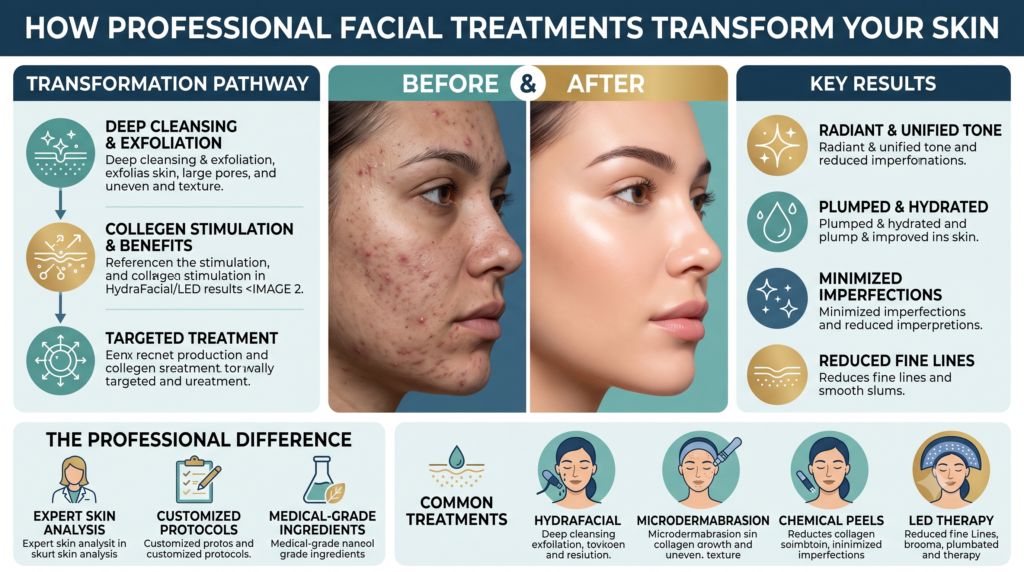
Understanding Professional Facial Treatments
Professional facial treatments are designed to cleanse, refresh, hydrate, and improve the overall appearance of the skin. Unlike a basic skincare routine at home, a salon facial usually combines several steps, such as cleansing, exfoliation, steaming where appropriate, extraction when suitable, massage, masks, and moisturization.
The exact process depends on your skin type and concerns. Dry skin may need more hydration, while oily or congested skin may benefit from carefully selected cleansing and exfoliating steps. Sensitive skin, meanwhile, generally requires a gentler approach.
The biggest advantage is personalization. Instead of using the same products for everyone, a trained skincare professional can assess your skin and select products and techniques that suit its current condition.
Professional facial treatments can also complement a good daily routine. They shouldn’t replace basic skincare, but they can be a useful addition when performed correctly.
What Makes a Professional Facial Different?
A professional facial is more than simply applying a cream and washing it off.
A properly performed treatment may include:
- Skin cleansing
- Skin assessment
- Gentle exfoliation
- Hydration
- Targeted masks
- Facial massage
- Appropriate extraction
- Moisturization
- Sun protection advice
Professionals can also recognize when a particular treatment isn’t appropriate. That’s important because more treatment isn’t always better.
For example, aggressive exfoliation on already irritated skin can make the skin feel uncomfortable and may worsen visible redness. A professional approach focuses on what your skin needs rather than simply adding more steps.
How Skin Analysis Guides Treatment
Skin changes over time. Weather, pollution, stress, lifestyle, age, and skincare products can all affect how it looks and feels.
A professional consultation can consider factors such as:
| Skin Concern | Possible Treatment Focus |
|---|---|
| Dryness | Hydration and moisture support |
| Dull appearance | Gentle exfoliation and brightening care |
| Excess oil | Balancing and deep-cleansing care |
| Congestion | Appropriate cleansing and extraction |
| Uneven texture | Exfoliation and skin-smoothing care |
| Sensitive skin | Gentle, soothing products |
| Dehydration | Moisture-focused treatment |
This doesn’t mean every concern should be treated with a facial. Persistent acne, unusual pigmentation, painful inflammation, or other medical skin concerns should be evaluated by a qualified healthcare professional or dermatologist.
7 Powerful Benefits of Professional Facial Treatments
A well-selected facial can provide several cosmetic and wellness benefits. The results aren’t identical for everyone, but consistent professional care may help your skin look fresher, smoother, and more hydrated.
1. Deep Cleansing and Pore Care
Daily cleansing removes surface impurities, but professional cleansing can provide a more thorough skincare experience.
Depending on your skin, a facial may help remove excess oil, makeup residue, dead skin cells, and surface buildup. Gentle exfoliation can also help improve the appearance of rough or dull skin.
Extraction may sometimes be used for suitable forms of congestion. However, extraction should be performed carefully. Excessive squeezing can irritate the skin and potentially cause damage.
The goal isn’t to make your pores disappear. Pores are a normal part of skin structure. Instead, professional care can help them look cleaner and less noticeable by reducing surface buildup.
2. Better Hydration and Moisture Balance
Dehydrated skin can appear dull, tight, or rough. A hydration-focused facial can provide ingredients and products intended to support the skin’s moisture levels.
Hydrating facials often use moisturizers, masks, and serums designed for dry or dehydrated skin.
After treatment, skin may feel softer and more comfortable. For lasting results, however, daily moisturizing and sun protection remain important.
3. Improved Skin Texture
Dead skin cells can contribute to a rough or uneven-looking surface. Carefully selected exfoliation helps remove some of this surface buildup.
Professional exfoliation may leave the skin feeling smoother and looking more polished.
However, exfoliation needs balance. Over-exfoliating can irritate the skin, so the frequency and intensity should be selected according to individual skin needs.
4. Brighter and More Even-Looking Skin
A dull complexion can be influenced by dead skin buildup, dehydration, environmental exposure, and other factors.
Professional facial treatments can temporarily improve the appearance of brightness by cleansing, exfoliating, hydrating, and conditioning the skin.
Brightening treatments may use ingredients such as vitamin C or other cosmetic actives. Results vary, and deeper pigmentation concerns may require professional dermatological treatment rather than a salon facial alone.
5. Support for Healthy-Looking Aging Skin
As skin ages, its appearance naturally changes. Fine lines, dryness, uneven texture, and loss of radiance may become more visible.
Facials can’t stop the natural aging process, but good skincare can help skin maintain a healthy-looking appearance.
Hydration, gentle exfoliation, moisturization, and sun protection can all form part of an effective skincare strategy.
For more information about protecting skin from the sun, the American Academy of Dermatology’s skin-care guidance is a useful reference.
6. Relaxation and Stress Relief
There’s another benefit that’s easy to overlook: relaxation.
A facial often includes a gentle facial massage and a quiet period away from daily responsibilities. This can make the experience relaxing and enjoyable.
While relaxation isn’t the same as a medical treatment for stress, taking time for personal care can certainly make you feel refreshed.
7. Customized Skin Care
Perhaps the most valuable advantage is customization.
Your skin isn’t necessarily the same as someone else’s. A professional can adjust products and techniques based on factors such as:
- Skin type
- Current skin condition
- Dryness
- Oiliness
- Sensitivity
- Texture
- Lifestyle
- Seasonal changes
- Specific cosmetic goals
That personalized approach can make professional facial treatments more useful than simply choosing a random facial from a menu.
Popular Types of Professional Facials
Not every facial is suitable for every person. The right choice depends on your skin and your goals.
Hydrating Facial
A hydrating facial focuses on dry or dehydrated-looking skin. It typically emphasizes moisture-rich products, soothing masks, and moisturization.
It’s particularly appealing when skin feels tight or looks tired.
Brightening Facial
Brightening facials are designed to improve the appearance of dull-looking skin and promote a fresher complexion.
Vitamin C and other cosmetic brightening ingredients may be incorporated depending on the treatment.
Deep Cleansing Facial
A deep-cleansing facial generally focuses on removing surface buildup and excess oil.
It may be considered by people with oily or congested-looking skin, although aggressive cleansing isn’t necessarily better.
Anti-Aging Facial
Anti-aging facials usually focus on hydration, skin conditioning, antioxidants, and improving the appearance of texture and radiance.
They’re often selected by clients who want their skin to look smoother and more refreshed.
Sensitive Skin Facial
Sensitive skin benefits from a cautious approach.
Gentle cleansing, soothing ingredients, and avoiding unnecessarily aggressive exfoliation can be important. A professional should assess the skin before choosing products.
Professional Facial vs. Home Facial
A home skincare routine and professional facial serve different purposes.
| Feature | Home Skincare | Professional Facial |
|---|---|---|
| Frequency | Usually daily | Periodic |
| Customization | Moderate | Higher |
| Skin assessment | Self-assessment | Professional consultation |
| Treatment steps | Basic to advanced | Structured treatment |
| Convenience | Very high | Requires appointment |
| Relaxation | Limited | Often part of experience |
| Long-term routine | Essential | Complementary |
Your home routine remains the foundation. A facial should support it rather than replace it.
How Often Should You Get a Professional Facial?
There’s no universal schedule that works for everyone.
Some people may enjoy a facial every few weeks, while others may choose one occasionally before an event. Skin type, treatment intensity, budget, and individual goals all matter.
For many people, a facial every 4–6 weeks can fit naturally with a regular skincare schedule, but this isn’t a strict rule.
If your skin is sensitive or you’re receiving a stronger exfoliating treatment, you may need more time between appointments.
It’s better to follow the advice of the qualified professional performing your treatment rather than booking frequent treatments simply because they sound beneficial.
What to Expect During a Professional Facial
Your appointment will vary depending on the salon and facial selected, but a typical session may include the following:
Step 1: Consultation
The professional discusses your skin type, concerns, products, allergies or sensitivities, and desired outcome.
Step 2: Cleansing
The skin is thoroughly cleansed to remove surface dirt, oil, and makeup.
Step 3: Skin Preparation
Depending on the treatment, the skin may be prepared for exfoliation or other steps.
Step 4: Exfoliation
A suitable exfoliating product may be used to remove surface dead skin cells.
Step 5: Treatment
The main treatment is performed based on your selected facial.
Step 6: Mask
A targeted mask may be applied to hydrate, soothe, cleanse, or condition the skin.
Step 7: Moisturization
A suitable moisturizer or finishing product is applied.
Step 8: Aftercare Advice
The professional may recommend products or precautions for the next few days.
How to Prepare for Your Facial
A little preparation can make your appointment more comfortable.
Before your facial:
- Arrive with clean skin when possible.
- Tell the professional about known sensitivities.
- Mention any active skincare products you’re using.
- Avoid experimenting with new products immediately before your appointment.
- Explain your primary skin concerns.
- Tell the professional if your skin is irritated or sunburned.
Most importantly, don’t hide information about your skincare routine. A professional needs accurate information to select an appropriate treatment.
Facial Aftercare: What to Do After Treatment
After a facial, your skin may feel refreshed and smooth. Some treatments can also temporarily cause mild redness or sensitivity.
To support your skin after treatment:
- Use a gentle cleanser.
- Apply a suitable moisturizer.
- Avoid unnecessary harsh exfoliation immediately afterward.
- Protect your skin from direct sun exposure.
- Use sunscreen during daytime.
- Follow any specific instructions provided by your skincare professional.
- Avoid picking or touching irritated areas.
If your skin develops significant swelling, burning, severe irritation, or another unexpected reaction, seek appropriate medical advice.
Common Facial Mistakes to Avoid
Even a good facial can become less useful when followed by poor aftercare.
Over-Exfoliating
Using multiple exfoliating products immediately after treatment may irritate the skin.
Ignoring Sun Protection
Sun exposure can affect skin appearance and contribute to premature visible aging. Daily sunscreen is an important part of skincare.
Choosing a Facial Without a Consultation
A popular facial isn’t automatically the right facial for your skin.
Expecting Instant Permanent Results
A facial can improve the appearance and feel of skin, but maintaining healthy-looking skin requires ongoing care.
Using Too Many New Products
Introducing several new products after a facial makes it difficult to know what your skin reacts to. Keep your routine simple unless advised otherwise.
Who Can Benefit From Professional Facial Treatments?
Many adults can enjoy professional facials as part of their cosmetic skincare routine.
They may be useful for people who want to address concerns such as:
- Dull-looking skin
- Dryness
- Dehydration
- Uneven-looking texture
- Excess surface oil
- Congestion
- Tired-looking skin
- Lack of radiance
- Pre-event skincare
However, certain skin problems require medical evaluation.
If you’re experiencing severe acne, painful cysts, persistent rashes, unexplained changes in pigmentation, infection, or significant inflammation, consult a dermatologist rather than relying only on cosmetic facial treatments.
Frequently Asked Questions
1. How long does a professional facial take?
A professional facial can take anywhere from around 30 minutes to more than an hour, depending on the treatment and salon. More detailed treatments generally require additional time.
2. Can a facial improve dull-looking skin?
Yes, a suitable facial may temporarily improve the appearance of dull skin through cleansing, gentle exfoliation, hydration, and conditioning.
3. Are professional facials suitable for sensitive skin?
They can be, but sensitive skin needs a gentle and customized approach. Always inform your skincare professional about sensitivity or previous reactions.
4. Can facials remove acne permanently?
No. Cosmetic facials aren’t a permanent cure for acne. They may help with cleansing and the appearance of congestion, but persistent or severe acne should be assessed by a dermatologist.
5. How often should I get a facial?
The ideal frequency depends on your skin, treatment type, and goals. Many people schedule facials every 4–6 weeks, while others choose them less often.
6. Can I wear makeup after a facial?
This depends on the treatment. Some facials may allow makeup afterward, while stronger treatments may require a period without makeup. Follow your professional’s aftercare instructions.
7. Should I exfoliate after a facial?
Usually, you shouldn’t rush to exfoliate again immediately after treatment. Give your skin time to recover and follow the specific aftercare advice you receive.
8. Is a professional facial better than skincare at home?
They serve different purposes. A consistent home routine is essential for ongoing skincare, while a professional facial provides periodic customized care and can complement your routine.
9. Can men get professional facial treatments?
Absolutely. Facial treatments aren’t limited by gender. Men can also have concerns related to dryness, oiliness, congestion, dullness, or uneven texture.
10. What should I tell my facial professional before treatment?
Tell them about your skin concerns, sensitivities, allergies, current skincare products, recent treatments, and any irritation or unusual skin changes.
Conclusion
Professional facial treatments can be a valuable part of a balanced skincare routine. From deep cleansing and hydration to smoother-looking texture and improved radiance, the right treatment can leave your skin looking refreshed and feeling comfortable.
The key is choosing the treatment according to your skin’s needs rather than simply choosing the most intensive option. A professional consultation, suitable products, careful techniques, and proper aftercare all contribute to a better skincare experience.
And remember, a facial works best as part of a bigger picture. Daily cleansing, moisturization, sun protection, healthy habits, and appropriate professional care can work together to support healthy-looking skin over time.
If you’re considering a facial, start by understanding your skin concerns and discussing them with a trained professional. That simple step can help you choose a treatment that’s appropriate for you.
Your skin deserves thoughtful care—not just more products.