
1. Introduction to the Salon Business in India
Have you ever dreamed of owning a salon where people walk in looking for a change and leave feeling confident, refreshed, and ready to take on the world? Starting a salon business in India can be an exciting entrepreneurial opportunity for people interested in beauty, grooming, and customer service. The beauty industry serves a wide range of customers, from students and working professionals to families and brides preparing for special occasions. However, opening a salon involves much more than arranging mirrors, purchasing styling chairs, and hiring a few professionals. You need a clear business plan, a suitable location, trained staff, reliable suppliers, and a strategy for attracting customers consistently. Whether you want to open an independent salon or invest in a franchise, understanding the fundamentals of the business can help you make informed decisions. The Salon Mafia is a premium unisex salon concept that offers entrepreneurs an opportunity to explore a distinctive salon brand and a structured business model. This guide explains how to start a salon business in India, manage your investment, build a strong customer base, and develop a business that can grow over time.
2. Why Start a Salon Business in India?
The salon industry offers opportunities for entrepreneurs because personal grooming and beauty services are part of everyday life for many consumers. Customers visit salons for haircuts, hair colouring, skincare, manicures, pedicures, bridal makeup, and other personal care services. Unlike businesses that depend entirely on occasional purchases, salons can encourage repeat visits through regular grooming appointments and service packages. A customer who visits for a haircut may return for a hair spa, facial, or hair treatment, creating opportunities to build long-term relationships. However, the industry’s potential does not guarantee success for every salon. Profitability depends on factors such as location, service quality, operating expenses, customer retention, and competition. Entrepreneurs should evaluate local demand and understand their target audience before investing. A salon that provides consistent service, transparent pricing, and a comfortable atmosphere can gradually build a loyal customer base. The key is to approach the business as a long-term investment rather than expecting immediate profits after opening.
2.1 Growing Demand for Professional Beauty Services
Professional beauty services are becoming increasingly accessible in metropolitan cities, smaller cities, and residential neighbourhoods across India. Customers are exploring different hairstyles, skincare treatments, grooming services, and wellness experiences, while social media exposes them to new trends and techniques. This creates opportunities for salons that understand local preferences and offer services suited to their customers’ needs. Industry estimates vary depending on the market definition and research methodology, so entrepreneurs should avoid relying on a single market-size figure when preparing financial projections. Instead, they should study the number of potential customers in their target area, the services offered by competing salons, and the price points customers are comfortable paying. A neighbourhood salon may succeed by focusing on convenience and affordable services, while a premium salon may attract customers through specialised treatments and personalised experiences. Understanding these differences helps business owners select a format that matches their investment capacity and local demand.
3. Understanding Different Salon Business Models
Before opening a salon, you need to decide what type of business you want to operate. Some entrepreneurs prefer a small neighbourhood beauty parlour, while others aim to establish a premium unisex salon with multiple service categories. A compact salon may focus on haircuts, basic grooming, and essential beauty treatments, whereas a larger establishment may offer hair colouring, advanced skincare, nail services, bridal makeup, and spa treatments. The right model depends on your budget, experience, target customers, and long-term objectives. You should also consider whether you want to manage the business independently or work with an established brand through a franchise arrangement. Each model comes with different responsibilities, costs, and levels of operational control. A clear understanding of these options helps you avoid investing in a business format that does not match your resources. Before committing to a particular model, compare the expected expenses, staffing requirements, service opportunities, and potential customer demand.
3.1 Independent Salon vs. Salon Franchise
An independent salon gives you greater freedom to create your own brand, select suppliers, establish pricing, and develop service standards. However, you must build your reputation from scratch and create your own systems for marketing, staff training, and daily operations. A salon franchise operates under an established brand and may provide support with business planning, interior design, training, marketing, and operational procedures, depending on the agreement. In return, franchisees may need to pay an initial franchise fee, ongoing royalties, or other charges. Neither model guarantees profitability, and the quality of franchise support can vary considerably. Before selecting a franchise, carefully review the agreement, investment requirements, territory conditions, support commitments, and financial projections. Entrepreneurs should also compare the franchise model with the cost of establishing an independent business. The right decision depends on how much control, support, and financial commitment you are comfortable with.
| Feature | Independent Salon | Salon Franchise |
|---|---|---|
| Brand identity | Created by the owner | Uses an established brand |
| Initial investment | Depends on the chosen format | Includes applicable franchise fees |
| Business control | Greater operational freedom | Subject to franchise agreement |
| Marketing | Developed independently | May include brand marketing support |
| Training | Arranged by the owner | May be provided by the franchisor |
| Ongoing fees | No franchise royalty | Royalty or other fees may apply |
| Business risk | Owner builds systems independently | Depends on brand support and local execution |
4. How to Create a Salon Business Plan
A salon business plan is the foundation of your investment decision. It should explain what type of salon you want to open, who your customers will be, what services you will provide, and how you intend to generate revenue. Start by defining your business concept and identifying the customers you want to serve. For example, a salon near a residential area may focus on family grooming, while a premium salon in a commercial district may target working professionals and customers seeking specialised treatments. Your plan should include estimated startup expenses, monthly operating costs, pricing, staffing requirements, and a sales forecast. It should also identify competitors and explain how your salon will differentiate itself. A realistic business plan includes conservative assumptions rather than relying on optimistic revenue projections. By preparing a detailed financial plan before signing a lease, you can better understand how much capital you need and how long your business may take to reach financial stability.
5. How Much Investment Is Required to Start a Salon?
The investment required to start a salon business in India depends on its size, location, interior design, equipment, service offerings, and business model. A small neighbourhood salon may require a relatively modest budget, while a premium unisex salon with specialised treatment areas can involve a significantly larger investment. Published estimates vary widely because some include only the basic setup, while others account for deposits, working capital, franchise fees, and pre-opening expenses. For planning purposes, a compact salon might require approximately ₹4 lakh to ₹12 lakh, a mid-sized salon around ₹10 lakh to ₹25 lakh, and a premium salon ₹25 lakh or more. These are illustrative estimates, not guaranteed quotations, and actual costs can exceed these ranges in expensive locations or elaborate interiors. Entrepreneurs should obtain local quotations and prepare a detailed budget before making financial commitments.
5.1 Understanding Salon Setup Costs
A salon’s startup budget typically includes rent deposits, interior work, equipment, furniture, product inventory, registrations, staff recruitment, and marketing. Working capital is equally important because the business will need money to pay salaries, rent, utilities, and suppliers while building its customer base. Spending too much on interiors can leave insufficient funds for everyday operations, so entrepreneurs should balance appearance with financial stability. The following table provides a simplified example of how expenses may be distributed for a mid-sized salon. The figures are illustrative and should be adjusted according to the city, premises, service mix, and quality of equipment.
| Expense Category | Illustrative Budget |
|---|---|
| Rent deposit and advance | ₹1,50,000 |
| Interior design and renovation | ₹5,00,000 |
| Salon equipment and furniture | ₹3,00,000 |
| Initial products and consumables | ₹1,00,000 |
| Registrations and professional fees | ₹50,000 |
| Marketing and launch activities | ₹75,000 |
| Working capital reserve | ₹3,00,000 |
| Total Estimated Investment | ₹14,75,000 |
This example represents a hypothetical budget rather than a confirmed setup cost for The Salon Mafia. A franchise investment may also include a brand fee, technology charges, or other contractual expenses. Always verify which items are included in the quoted investment and which must be paid separately.
6. Choosing the Right Location for Your Salon
Location can significantly influence a salon’s visibility, customer convenience, and operating expenses. Before selecting a property, study the surrounding neighbourhood and identify the people most likely to use your services. Residential areas may provide regular demand for haircuts and grooming, while commercial locations may attract office workers looking for convenient appointments. Consider road visibility, parking availability, public transport access, nearby businesses, and the presence of competing salons. Visit shortlisted locations at different times of the day to understand foot traffic and customer activity. You should also check whether the premises have sufficient water supply, drainage, ventilation, electrical capacity, and space for the services you intend to offer. A property with attractive rent may become expensive if it requires major renovations or cannot accommodate essential equipment. Before signing a lease, review the permitted commercial use and relevant local approval requirements.
7. Legal Requirements and Licenses for a Salon in India
Setting up a salon involves completing the registrations and approvals applicable to your business structure and location. Requirements may vary between states, municipalities, and types of premises, so entrepreneurs should verify the rules with the relevant authorities before opening. Common considerations include business constitution, registration under the applicable Shops and Establishments law, municipal trade permissions where required, and GST registration when applicable. Fire safety approvals, signage permissions, employment-related registrations, and other clearances may also apply depending on the premises and services offered. You should maintain proper records of expenses, employee payments, customer transactions, and supplier invoices. Consulting a qualified accountant or business professional can help you understand your obligations and avoid preventable compliance problems. Entrepreneurs may also consider Udyam registration if their business qualifies as an MSME. The official government portal states that Udyam registration is free and paperless.
8. Designing a Modern and Attractive Salon Interior
A salon’s interior should create a welcoming atmosphere while supporting efficient daily operations. Customers often notice the cleanliness, lighting, seating, and overall ambience as soon as they enter the premises. A thoughtfully designed space can improve the customer experience and help staff perform services comfortably. Consider the placement of styling stations, wash units, reception, waiting areas, treatment rooms, and storage spaces before beginning renovation work. Choose durable materials that are easy to clean and suitable for a busy service environment. Lighting should support accurate hair colouring, makeup application, and skincare treatments without making the space uncomfortable. Brand colours, signage, mirrors, and decorative elements should reflect the salon’s identity without overcrowding the interior. For a premium concept such as The Salon Mafia, a distinctive visual identity can help create a memorable experience, but functionality and hygiene should remain central to the design.
9. Essential Equipment and Products for a Salon
Salon equipment should be selected according to the services you intend to provide and the number of customers you expect to serve. Essential items for a hair salon may include styling chairs, mirrors, wash stations, hair dryers, straighteners, clippers, scissors, and trolleys. A salon offering skincare and beauty treatments may also require facial beds, steamers, manicure tables, pedicure chairs, and specialised equipment. Product inventory should include professional shampoos, conditioners, hair colour, styling products, skincare products, and disposable consumables suitable for the services offered. Choose reliable suppliers and verify product authenticity, safety information, and storage requirements. Equipment maintenance is another important consideration because faulty tools can interrupt appointments and create unnecessary expenses. Rather than purchasing every available product at launch, begin with a carefully selected inventory based on customer demand. You can expand your equipment and product range as the business develops.
10. Hiring and Training the Right Salon Staff
Your employees play a major role in shaping the salon’s reputation and customer experience. Skilled hairstylists, beauticians, makeup artists, receptionists, and support staff help maintain service quality and ensure that daily operations run smoothly. When hiring, assess technical skills, professional experience, communication, hygiene practices, and the ability to work as part of a team. Practical demonstrations and reference checks can help you evaluate candidates more effectively. Training should cover service procedures, customer consultation, product knowledge, safety practices, and complaint handling. Clear responsibilities and fair compensation structures can help create a more stable working environment. You should also establish performance standards that focus on customer satisfaction, service quality, punctuality, and responsible product usage. Regular training sessions help employees stay informed about new techniques and changing customer preferences. A professional team can encourage repeat visits and positive recommendations.
11. Creating a Profitable Salon Service Menu
A well-planned service menu helps customers understand what your salon offers and makes it easier for them to choose suitable treatments. Start with services that match the needs of your target audience and the skills of your team. Haircuts, hair styling, hair spa treatments, colouring, skincare, waxing, manicure, pedicure, and bridal makeup are common categories that salons may consider. However, offering too many services from the beginning can increase inventory costs and create staffing challenges. It is often more practical to launch with a focused selection and expand when customer demand becomes clear. Each service should have a defined procedure, estimated duration, product requirement, and pricing structure. Clear descriptions help customers understand what is included in a treatment and reduce misunderstandings. You can also create packages that combine complementary services, provided the pricing covers the associated costs. A balanced menu should support customer choice while remaining operationally manageable.
12. Salon Pricing Strategies and Revenue Planning
Pricing should reflect the cost of delivering each service, the skill level required, local competition, and the value customers receive. Setting prices too low may attract customers initially but can make it difficult to cover salaries, rent, products, and other operating expenses. On the other hand, premium pricing requires a service experience that supports customer expectations. Calculate the direct product cost and labour time associated with each treatment before deciding on a price. Then account for overhead expenses and the margin needed to sustain the business. Revenue planning should include realistic assumptions about customer visits, average spending, repeat bookings, and seasonal demand. For example, bridal services may generate higher revenue during wedding seasons, while regular haircuts and grooming can provide more consistent demand throughout the year. Review service performance regularly and adjust pricing when costs or customer preferences change. Avoid treating projected revenue as guaranteed profit.
13. How to Market Your Salon Business
Marketing helps introduce your salon to potential customers and gives people a reason to choose your services. A new salon should develop a clear brand identity, communicate its service offerings, and make it easy for customers to find contact details and book appointments. Local marketing can include introductory offers, partnerships with nearby businesses, referral programmes, and community events. Promotional campaigns should be designed to attract the right customers rather than relying entirely on heavy discounts. Encourage satisfied customers to share genuine feedback and recommend the salon to others. Keep promotional messages accurate and avoid promising results that cannot be guaranteed. You can also use seasonal campaigns around weddings, festivals, and special occasions to highlight relevant services. Consistent communication helps customers remember your brand and understand what makes your salon different. Marketing should be treated as an ongoing business activity rather than a one-time launch expense.
13.1 Digital Marketing and Social Media Strategies
Digital marketing is especially useful for salons because beauty services are highly visual and customers often search online before making an appointment. Instagram and Facebook can showcase hairstyles, makeup looks, nail art, salon interiors, and educational beauty content. Short videos demonstrating transformations, explaining treatments, or introducing team members can help potential customers understand your services. A Google Business Profile can improve your visibility in local searches and provide essential information such as opening hours, contact details, directions, and customer reviews. WhatsApp can support appointment confirmations, service reminders, and customer communication when used responsibly. Your website should include a clear service menu, location details, booking options, and relevant business information. Track enquiries, bookings, and repeat visits to understand which marketing activities are producing meaningful results. For The Salon Mafia, consistent branding across social media, the website, and the physical salon can help build recognition in the local market.
14. Customer Experience and Retention Strategies
Customer retention is an important part of building a sustainable salon business. A customer who receives a positive experience may return for future services and recommend the salon to friends and family. Begin by making appointments convenient and greeting customers professionally when they arrive. Before starting a service, understand their preferences, discuss the available options, and explain the expected process. Staff should maintain cleanliness, use appropriate products, and communicate clearly throughout the appointment. After the service, invite feedback and provide practical aftercare guidance where relevant. Loyalty programmes, membership packages, and personalised reminders can encourage repeat visits when they offer genuine value. However, customer data should be collected and used responsibly, with appropriate consent and privacy practices. A strong customer experience is built through consistent service quality, honest communication, and attention to individual needs.
15. Salon Operations and Business Management
Efficient salon management requires clear systems for appointments, billing, inventory, staff schedules, customer records, and financial reporting. A salon management system can help owners track daily sales, monitor bookings, manage customer information, and identify popular services. Inventory records are particularly useful for controlling product consumption and reducing unnecessary waste. Owners should review revenue, expenses, outstanding payments, and cash flow regularly rather than waiting until the end of the month. Staff schedules should match expected customer demand while allowing sufficient time for cleaning, preparation, and training. Written procedures can help maintain consistent service standards across different employees and shifts. If you operate multiple outlets, standardised reporting and operating procedures become even more important. A salon is not managed successfully through sales alone; disciplined financial and operational practices help protect the business and support future growth.
16. Common Challenges in the Salon Business
Salon owners may face several challenges during the early stages of business, including limited customer awareness, high operating expenses, staff turnover, and competition from established salons. Another common difficulty is underestimating the working capital required to maintain operations before revenue becomes consistent. Entrepreneurs may also struggle with pricing, inventory management, or maintaining service quality as the customer base grows. These challenges can be reduced through careful planning, regular financial reviews, and clear operating procedures. Before opening, prepare a cash reserve that can cover essential expenses during slower periods. Invest in staff training and establish a workplace culture that encourages professionalism and accountability. Monitor customer feedback and respond constructively when problems arise. A successful salon is not one that never encounters difficulties; it is one that identifies problems early and takes practical steps to address them.
17. How The Salon Mafia Can Help Entrepreneurs
The Salon Mafia is a premium unisex salon concept designed around a distinctive brand identity and a modern salon experience. Entrepreneurs exploring the salon industry may consider a franchise model when they want to build a business with a defined brand concept and structured operating approach. A franchise arrangement may provide support in areas such as site planning, interior design, staff training, marketing, and business operations, depending on the terms agreed with the franchisor. The Salon Mafia’s distinctive branding can help create a recognisable identity for a salon targeting customers who value professional grooming and a premium atmosphere. However, prospective franchisees should evaluate the actual services and support included in the franchise package before making an investment. They should also examine the brand fee, total setup costs, royalty structure, territory rights, and contractual obligations. A franchise should be assessed through documented terms and realistic financial planning rather than marketing promises alone.
Why Entrepreneurs May Explore The Salon Mafia
Entrepreneurs considering The Salon Mafia may be interested in several aspects of its business concept:
- Distinctive brand identity: A recognisable salon concept with a premium unisex positioning.
- Salon business opportunity: A model for entrepreneurs interested in entering the beauty and grooming industry.
- Professional service environment: A focus on delivering hair, beauty, and grooming services in a structured setting.
- Franchise exploration: An opportunity to discuss brand support, setup requirements, and operational expectations.
- Business expansion: A concept that may be considered by entrepreneurs exploring salon ownership or multi-outlet growth.
The availability of specific services, training programmes, franchise benefits, and operational support should be confirmed directly with the brand before making a financial commitment.
18. Steps to Launch Your Salon Successfully
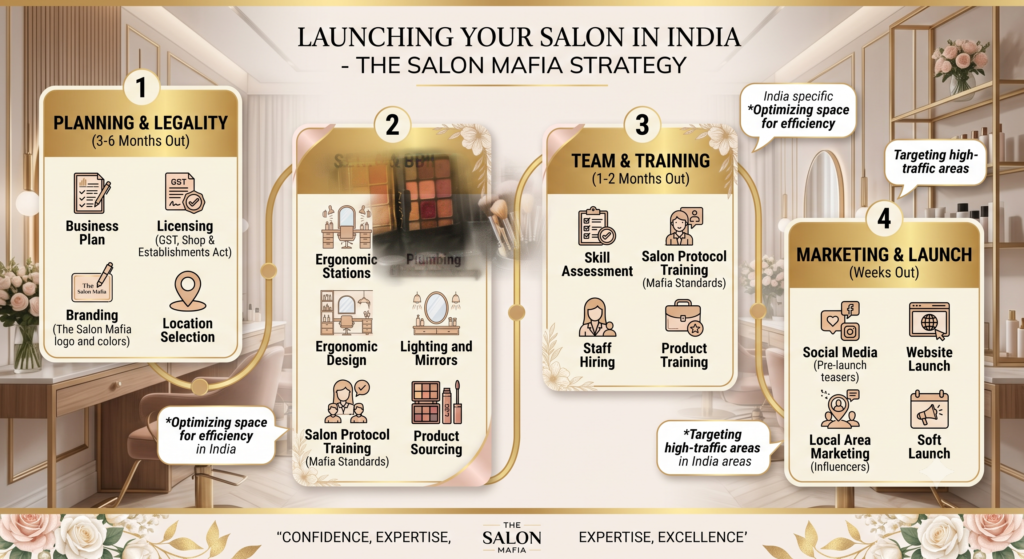
Launching a salon requires careful coordination between planning, property selection, setup, recruitment, and marketing. Start by defining your concept and preparing a business plan with a realistic investment budget. Shortlist suitable locations and verify that the premises can accommodate your intended services and comply with applicable requirements. Finalise the business structure, complete the necessary registrations, and begin interior work after confirming the property’s suitability. Purchase essential equipment, select suppliers, and recruit trained professionals who match your service requirements. Before opening, test the appointment system, billing process, inventory records, and customer service procedures. A soft launch can help identify operational issues before the salon begins full-scale marketing. Collect customer feedback, monitor early sales, and adjust staffing or promotional activities according to actual demand. A structured launch helps reduce avoidable mistakes and creates a stronger foundation for the business.
19. Future Growth Opportunities in the Salon Industry
Once a salon establishes a stable customer base, the owner can explore opportunities to expand services, improve customer retention, or develop additional outlets. Growth may involve introducing specialised hair treatments, expanding skincare services, offering bridal packages, or creating membership programmes. Some businesses may consider adding professional training programmes or developing their own retail product lines, provided they have the required expertise and resources. Entrepreneurs operating a successful independent salon may also explore franchising their brand in the future. However, expansion should be based on financial performance, operational readiness, and customer demand. Opening additional outlets before the first location has stable systems can create unnecessary financial and managerial pressure. A business should develop repeatable operating procedures, reliable leadership, and accurate financial reporting before attempting rapid growth. Long-term success depends on maintaining service quality while adapting to changing customer preferences and market conditions.
20. Conclusion: Build Your Salon Business with a Clear Vision
Starting a successful salon business in India requires a combination of planning, customer understanding, financial discipline, and professional service delivery. From selecting the right location and estimating startup costs to hiring skilled employees and developing a strong marketing strategy, every decision contributes to the business’s long-term performance. Entrepreneurs should carefully compare independent ownership with franchise opportunities and ensure that their investment matches their financial capacity. A salon can build a loyal customer base when it offers consistent service quality, transparent pricing, a welcoming atmosphere, and convenient customer communication. The Salon Mafia provides a distinctive premium unisex salon concept for entrepreneurs interested in exploring a branded salon business. Before investing, review the franchise terms, understand the complete setup costs, and prepare a realistic financial plan. With a clear vision, practical execution, and a commitment to customer satisfaction, entrepreneurs can work toward building a salon business designed for sustainable growth.
Frequently Asked Questions (FAQs)
1. How much investment is required to start a salon business in India?
The investment depends on the salon’s size, location, interior design, equipment, and service offerings. A small salon may require approximately ₹4 lakh to ₹12 lakh, while a mid-sized or premium salon may require ₹10 lakh to ₹25 lakh or more. These are indicative estimates, and actual costs vary.
2. Is a salon business profitable in India?
A salon can generate revenue through haircuts, hair treatments, skincare, grooming, and other beauty services. Profitability depends on customer demand, pricing, operating expenses, staff productivity, and repeat bookings. A detailed financial plan is essential before investing.
3. What licenses are required to open a salon in India?
Depending on the location and business structure, requirements may include registration under the applicable Shops and Establishments law, municipal trade permissions, GST registration when applicable, and fire safety approvals where required. Local authorities should be consulted to confirm the exact requirements.
4. Is a salon franchise better than starting an independent salon?
Both models have advantages and limitations. An independent salon offers greater control over branding and operations, while a franchise may provide brand recognition and structured support. The right choice depends on the entrepreneur’s budget, experience, business goals, and the franchise agreement.
5. How can I explore a salon franchise with The Salon Mafia?
You can explore The Salon Mafia’s franchise opportunity by requesting information about the investment, brand fee, setup requirements, training, operational support, and contractual terms. Review the complete franchise proposal and prepare a financial plan before making a decision.