
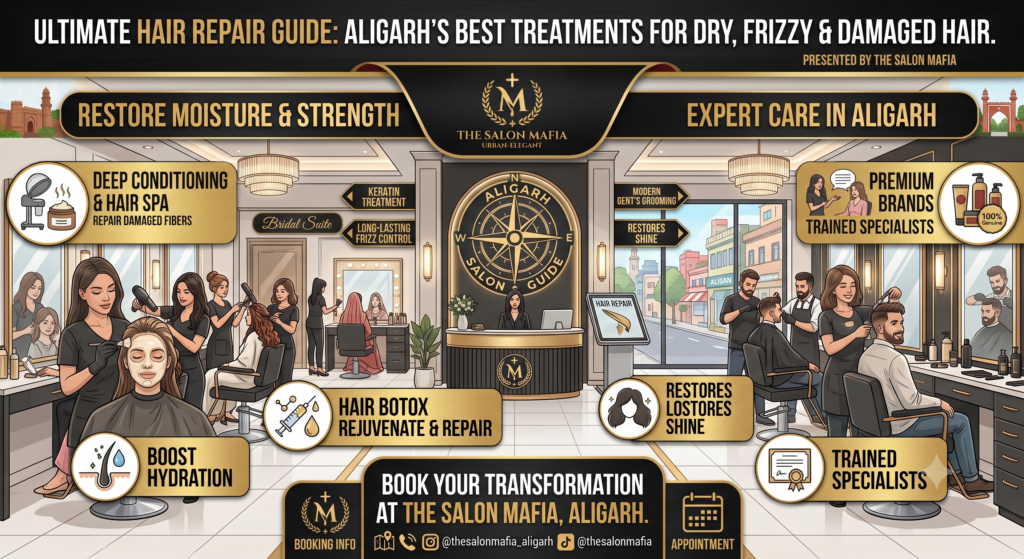
Dry, frizzy and damaged hair can make even a good hair day feel like hard work. You may spend time styling your hair, only to find that the ends still look rough, the strands refuse to cooperate and humidity turns everything into a frizzy cloud. The problem becomes even more frustrating when your hair has been exposed to frequent straightening, curling, coloring, bleaching, chemical treatments, sun exposure or rough handling. The good news is that you do not necessarily need to completely change your look or cut off all your hair to improve its appearance. A combination of the right professional treatment, gentle home care and reduced exposure to damaging habits can make hair look smoother, softer and more manageable. Dermatologists specifically recommend conditioning, reducing excessive heat and treating hair gently because damaged hair is more vulnerable to breakage.
Understanding Dry, Frizzy and Damaged Hair
Before choosing the best hair treatment for dry and damaged hair, it helps to understand what you are actually trying to fix. Dryness generally means the hair does not retain enough moisture or feels rough and difficult to manage, while frizz often becomes more noticeable when the hair surface is irregular and the strands respond to humidity. Damage is a broader problem involving the physical condition of the hair fiber, particularly the outer cuticle and, with more severe damage, deeper parts of the shaft. Heat styling, chemical processing, excessive brushing and environmental exposure can gradually affect the appearance, strength and manageability of hair. Research on hair cosmetics and hair-shaft damage shows that chemical and physical processes can disrupt the hair’s protective structure and contribute to reduced shine, increased roughness and breakage.
Think of your hair like a fabric that is exposed to repeated washing, ironing, coloring and friction. One session may not seem dramatic, but repeated stress can gradually change how the material behaves. The same idea applies to hair: frequent high-heat styling or chemical processing can make the strands more fragile over time. This is why the best approach is rarely just applying one miracle product and expecting permanent results. A successful routine usually combines conditioning, protection, controlled styling and an appropriate professional treatment according to the condition of the hair.
What Causes Hair to Become Dry and Frizzy?
There is rarely one single cause behind dry and frizzy hair. Your shampooing routine, water quality, climate, hair texture, styling habits, chemical treatments and even how you dry your hair can all influence the final appearance. Excessive heat is a particularly important factor because dermatologists note that repeated exposure to hot styling tools can damage hair regardless of hair type. Chemical services such as bleaching, coloring, straightening and perming can also affect the hair shaft, especially when treatments are repeated or combined.
Another common issue is mechanical stress. Aggressive towel rubbing, pulling through knots, repeated brushing and tight hairstyles can place unnecessary stress on already fragile strands. Wet hair can also be more vulnerable to breakage, which is why gentle detangling is important. The American Academy of Dermatology recommends using a wide-tooth comb where appropriate, minimizing unnecessary brushing and gently absorbing water rather than aggressively rubbing the hair.
Heat, Chemicals and Environmental Damage
Heat styling deserves special attention because it is easy to underestimate. A blow dryer, flat iron or curling iron may make hair look polished immediately, but frequent or excessive heat can contribute to structural damage. Research evaluating heat-damaged hair has identified changes involving the cuticle and cortex of the hair fiber, while dermatologists recommend reducing blow-drying frequency and using lower or medium heat settings when possible.
Chemical processing can create another layer of stress. Bleaching, coloring, relaxing, straightening and perming deliberately alter the hair’s structure to create a desired appearance, so the condition of the hair before treatment matters. The AAD recommends taking precautions when coloring or perming and notes that lightening hair significantly can require stronger peroxide and cause more damage.
How to Identify Seriously Damaged Hair
Not every rough-looking strand is severely damaged, but certain signs suggest that your hair needs more than a basic styling product. If your hair feels unusually rough immediately after washing, tangles easily, develops many split ends, snaps during brushing or has lost much of its natural shine, the hair fiber may be significantly compromised. Another clue is when the texture changes dramatically along the length—for example, relatively healthy roots combined with dry, brittle ends after repeated coloring or heat styling. Hair that has undergone several chemical services can be particularly vulnerable because multiple processes may compound existing damage.
The important distinction is between improving the appearance of damaged hair and permanently reversing damage to an already broken hair fiber. Hair is a keratinized fiber, and cosmetic treatments can improve smoothness, manageability, shine and feel, but they should not be marketed as magically restoring every damaged strand to its original biological condition. This is why trimming severely split ends, reducing ongoing damage and using conditioning products can be just as important as booking a salon treatment. If you have persistent breakage, significant hair loss or scalp symptoms, professional medical evaluation is more appropriate than repeatedly adding cosmetic treatments. The AAD recommends seeing a board-certified dermatologist when hair breakage or unmanageable hair continues despite appropriate conditioning and care.
Common Signs of Hair Damage
Common signs can include rough texture, persistent frizz, split ends, frequent tangling, reduced shine, brittle-feeling strands and breakage. Some people notice that their hair no longer holds a hairstyle the way it used to, while others find that their ends become tangled within hours of washing. Chemically treated hair can also feel different from untreated roots, particularly when bleaching or repeated straightening has occurred. These signs do not automatically indicate a medical condition, but they are useful signals that your current routine may be putting more stress on the hair than it can tolerate.
Best Hair Treatments for Dry and Damaged Hair
There is no universal best hair treatment for damaged hair because different types of damage require different strategies. Someone with mildly dry hair may benefit greatly from a deep-conditioning service, while someone with heavily processed hair may need a more intensive repair-focused treatment and a break from aggressive chemical services. Likewise, someone whose primary problem is frizz may be looking for smoothness and manageability rather than maximum reconstruction. A good salon consultation should therefore begin with examining the hair’s texture, previous chemical history, current condition and desired result.
The most useful professional treatments generally fall into several categories: conditioning treatments, hair spas, smoothing services and repair-focused treatments. Each has a different purpose, and the right choice depends on whether your main concern is dryness, frizz, breakage, roughness or manageability. Instead of asking only, “Which treatment is most popular?”, ask, “What does my hair actually need right now?”
Deep Conditioning Treatment
A deep conditioning treatment is often one of the simplest options for hair that feels dry, rough or difficult to detangle. The goal is to provide intensive conditioning so the hair feels softer, smoother and easier to manage. Conditioners work by improving the surface properties of the hair, reducing friction and improving manageability. Dermatology literature describes conditioners as products designed to improve manageability, reduce static and add luster, making them an important part of routine hair care.
This type of treatment can be especially useful when the hair is dry but not extensively structurally damaged. It can also complement other treatments because healthy-looking hair depends heavily on maintaining a smooth, conditioned surface. For people who frequently experience tangles or frizz after shampooing, regular conditioning can make everyday handling gentler. The key is consistency: one treatment may improve the feel temporarily, but maintaining that result requires an appropriate home routine.
Hair Spa Treatment
A hair spa treatment is commonly chosen by people who want a combination of cleansing, conditioning and intensive nourishment for dry or rough-looking hair. Depending on the salon and formulation, a hair spa may involve cleansing, a conditioning or mask step, massage and controlled rinsing. The biggest benefit is generally improved softness, manageability and cosmetic appearance rather than a promise of permanently repairing every damaged fiber.
Hair spa treatments can be particularly appealing when your hair feels tired after repeated styling or exposure to a dry environment. However, the quality of the treatment depends heavily on the products and technique being used. A good professional should assess the hair first instead of applying exactly the same treatment to every client. Fine hair, thick hair, curly hair, bleached hair and chemically straightened hair can have very different needs.
Keratin and Smoothing Treatments
Keratin and smoothing treatments are often considered when frizz and difficult manageability are the primary concerns. These services are designed to create a smoother-looking hair surface and make styling easier, which can be attractive for people who struggle with persistent frizz. However, it is important to distinguish cosmetic smoothing from repairing the biological structure of hair. Depending on the specific formulation and process, chemical straightening or smoothing procedures can themselves contribute to hair-shaft or scalp problems, so professional assessment and careful product selection matter.
Anyone considering a smoothing treatment should disclose previous bleaching, coloring, straightening and other chemical services to the stylist. Combining multiple chemical processes without considering the condition of the hair can increase the risk of breakage. If the scalp burns, stings excessively or becomes irritated during a chemical service, the process should not simply be ignored. Dermatology reviews have documented scalp irritation and hair-shaft damage associated with some chemical straightening practices.
Bond-Building and Repair Treatments
Bond-building or repair-focused salon treatments are another option for hair that has experienced significant chemical or thermal stress. These services are marketed around improving the condition and resilience of compromised hair fibers, particularly after bleaching or repeated chemical processing. Their exact ingredients and mechanisms vary widely between professional systems, so it is better to evaluate a specific formulation rather than assuming every “bond repair” treatment works identically.
These treatments can be useful as part of a broader damage-control strategy, but they should not become an excuse to continue excessive heat or chemical processing. Think of repair care as reinforcing a structure while also stopping the behavior that is weakening it. If you repair the hair and then immediately subject it to frequent high heat and repeated chemical processing, the underlying problem remains. The most effective routine therefore combines professional care with prevention.
Best Treatments for Frizzy Hair
If frizz is your biggest concern, start by identifying what is causing it. Frizz can be associated with dryness, damage, humidity, natural texture and mechanical disruption, so simply applying heavier products may not solve the problem. A conditioning treatment can help improve manageability, while a suitable leave-in conditioner can reduce friction and make hair easier to detangle. Dermatologists specifically note that leave-in conditioners can reduce frizz, static and flyaways while making hair easier to comb.
For some people, a professional smoothing service may provide longer-lasting cosmetic control, but the decision should be based on hair condition rather than trend. If your hair is already brittle from bleaching or repeated chemical treatments, adding another strong chemical process may not be the most appropriate next step. In that situation, improving conditioning, reducing heat and allowing the hair to recover from repeated processing may be more sensible.
Choosing the Right Treatment for Your Hair Type
Your hair type matters because the same treatment can produce different results on different textures. Fine, straight hair may become weighed down by very rich products, whereas thick or curly hair may require more conditioning to improve detangling and manageability. The AAD recommends applying conditioner according to hair characteristics, with dry or curly hair generally benefiting from conditioning throughout the length while finer or straighter hair may need more attention toward the ends.
| Hair Concern | Treatment Approach | Main Goal |
|---|---|---|
| Mild dryness | Deep conditioning | Softness and manageability |
| Persistent frizz | Leave-in conditioning or smoothing care | Frizz control |
| Rough, dull hair | Hair spa/deep conditioning | Improved feel and shine |
| Heat-damaged hair | Repair-focused conditioning + heat reduction | Reduce further breakage |
| Bleached or chemically processed hair | Professional repair and conditioning | Improve manageability and protect fragile strands |
| Severe split ends | Conditioning + trimming | Improve appearance and prevent splits traveling upward |
| Curly, dry hair | Rich conditioning + gentle detangling | Moisture retention and definition |
Home Care Routine for Damaged Hair
A professional treatment works much better when your home routine does not continuously undo the benefits. Start with gentle cleansing and focus shampoo primarily on the scalp rather than aggressively scrubbing the entire length. Follow with conditioner, particularly on the areas that feel dry or tangled. The AAD recommends conditioning after washing and using leave-in conditioner or detangler when appropriate to reduce breakage, split ends and frizz.
After washing, handle wet hair carefully. Instead of vigorously rubbing it with a towel, gently wrap or squeeze out excess water. Use a suitable comb and begin detangling from the ends, gradually working upward. If you use a blow dryer, allow some air-drying first and use a lower or medium heat setting whenever practical. A heat-protective product can also be useful when styling with heat, but it should not be treated as permission to use extreme temperatures every day.
A simple weekly routine can make a significant difference: cleanse according to your scalp and hair needs, condition consistently, use a deeper conditioning treatment when your hair requires it, minimize unnecessary heat and trim visibly damaged ends when needed. If your hair is curly or textured, detangling technique becomes particularly important because excessive manipulation can increase breakage. The goal is not to make your routine complicated; it is to make every step gentler.
Mistakes That Make Dry Hair Worse
One of the biggest mistakes is trying to solve damage with more aggressive styling. When hair looks rough, people often reach for a hotter straightener, stronger styling products or repeated chemical services because they want an immediate polished appearance. Unfortunately, excessive heat and chemical processing can contribute to further hair damage. Dermatologists recommend limiting heat exposure, avoiding excessive brushing and reducing practices that place unnecessary tension on the hair.
Another mistake is assuming that expensive products automatically equal healthier hair. Price can influence formulation and professional service quality, but the fundamental principles remain the same: cleanse appropriately, condition regularly, handle hair gently and reduce repeated damage. Another common mistake is applying leave-in conditioner directly to the scalp when the product is intended for the hair lengths. The AAD recommends applying leave-in conditioner to the hair rather than the scalp to reduce the risk of buildup and irritation.
How Often Should You Get a Hair Treatment?
There is no single treatment schedule that works for everyone. Hair that has been bleached or chemically processed may need more frequent conditioning care than relatively healthy untreated hair, but the exact schedule should depend on how the hair responds. If the hair becomes soft and manageable after treatment, you may simply need consistent maintenance rather than repeatedly booking intensive services. On the other hand, if dryness, tangling and breakage return quickly, the underlying causes should be reassessed.
It is also useful to separate maintenance treatments from major chemical transformations. A conditioning treatment can often be incorporated into regular hair care, whereas chemical straightening or smoothing should be approached more cautiously, particularly if the hair is already compromised. Repeated chemical stress has been associated with hair-shaft damage and, in some studies, scalp effects, so more treatment is not automatically better treatment.
Professional Treatment vs Home Hair Care
The best results often come from combining professional care with a realistic home routine. A salon professional can assess the visible condition of the hair, identify areas that need extra conditioning and recommend a service suited to the current state of the strands. Home care then maintains that result between appointments. Neither side should be viewed as a replacement for the other.
| Factor | Professional Treatment | Home Hair Care |
|---|---|---|
| Assessment | Personalized visual and tactile assessment | Self-assessment |
| Conditioning intensity | Can be more intensive | Usually maintenance-focused |
| Styling control | Professional technique | Depends on individual technique |
| Convenience | Requires appointment | Easy to maintain regularly |
| Long-term results | Depends on maintenance | Essential for maintaining results |
| Damage prevention | Professional guidance can help | Daily habits have major influence |
For example, imagine getting a professional deep-conditioning service and then using a flat iron at maximum temperature every morning without heat protection. The salon treatment may make the hair feel beautiful temporarily, but the repeated heat can continue contributing to damage. On the other hand, someone who receives a simple conditioning service and then carefully limits heat, detangles gently and conditions consistently may maintain a healthier-looking result for much longer. Hair care is therefore less about finding one magical treatment and more about creating a system that your hair can tolerate.
Conclusion
The best hair treatments for dry, frizzy and damaged hair depend on the reason your hair is struggling and how severe the damage has become. Deep conditioning can be useful for dryness and roughness, hair spa services can improve softness and manageability, smoothing treatments can address persistent frizz, and repair-focused services may be considered for chemically or thermally stressed hair. At the same time, professional treatments cannot completely replace good daily habits. Excessive heat, aggressive brushing, repeated chemical processing and tight hairstyles can continue damaging the hair even after a high-quality salon service.
A better strategy is to think beyond a single appointment. Choose treatments according to your hair’s current condition, protect the strands between services and reduce the habits that caused the problem in the first place. Use conditioner regularly, handle wet hair gently, reduce excessive heat and consider leave-in conditioning when your hair needs additional help. If you continue experiencing substantial breakage, unexplained hair loss or scalp symptoms despite improving your routine, speak with a qualified dermatologist rather than repeatedly adding cosmetic treatments.
FAQs
1. What is the best treatment for extremely dry hair?
A deep-conditioning or intensive conditioning treatment can be a useful starting point for extremely dry hair, particularly when the primary problem is roughness and poor manageability. The home routine also matters because repeated heat, chemical processing and rough handling can continue causing damage. If the hair is severely brittle or breaking, professional assessment can help determine whether conditioning alone is appropriate.
2. Can a hair spa fix damaged hair?
A hair spa can improve the feel, softness, shine and manageability of damaged hair, but it should not be considered a permanent cure for structural damage. Severely damaged ends may still need trimming, while ongoing heat or chemical exposure should be reduced. The best results usually come when a salon treatment is combined with appropriate home care.
3. Is keratin treatment good for frizzy hair?
Keratin and other smoothing treatments can make hair appear smoother and easier to manage, which may help people whose primary concern is frizz. However, the specific formulation and condition of the hair matter. Chemical smoothing can itself contribute to hair-shaft or scalp problems, so heavily bleached or fragile hair should be assessed carefully before such a service.
4. How can I reduce frizz naturally at home?
Start with gentle hair handling rather than adding many products. Use conditioner after washing, consider a suitable leave-in conditioner, avoid aggressive towel rubbing, minimize unnecessary brushing and reduce excessive heat styling. Dermatologists specifically recommend conditioning and gentle handling to help reduce breakage and improve manageability.
5. How can I prevent my hair from becoming damaged again?
The most important step is reducing the sources of repeated damage. Limit excessive heat, use appropriate heat protection, avoid unnecessary chemical processing, handle wet hair gently and maintain regular conditioning. If your hair is repeatedly breaking despite these changes, a dermatologist can help determine whether there is an underlying hair or scalp problem that requires medical attention.
🔍 Want to find the best keywords and rank this article faster? Try the #1 SEO & AI visibility toolkit free for 14 Days. Track your keyword rankings, audit your site, and monitor your AI search visibility on ChatGPT, Gemini & Google AI Overviews
✨ Get better articles, faster. This prompt is powerful. But Pro Article Writer takes it further — AI humanizer, SEO tools, full editor, one-click options, and more control all in one place. Try it free →
If this prompt helped you, please leave a review — it keeps this prompt ranked #1.