
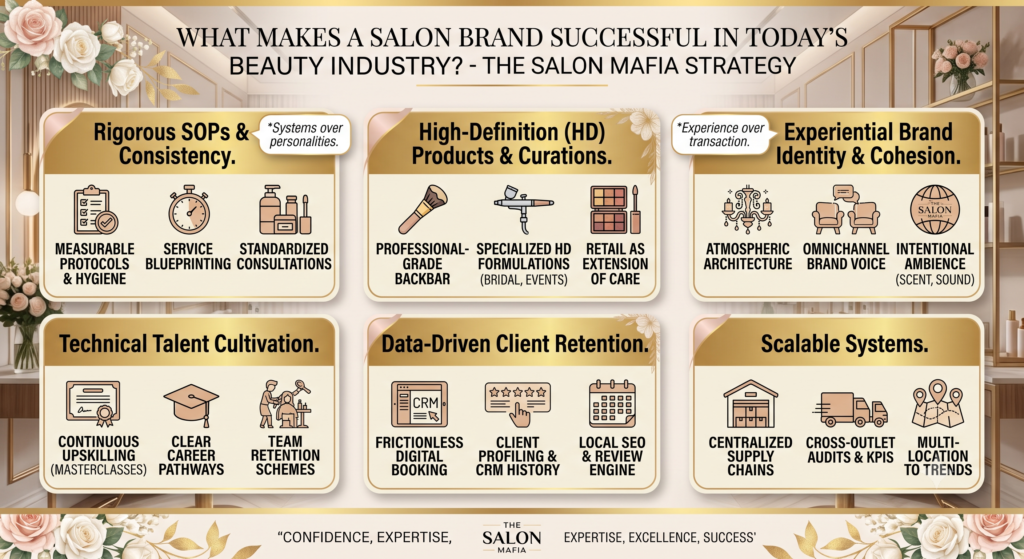
The beauty industry has changed dramatically over the past few years. A salon is no longer just a place where people get haircuts, facials, or makeup services. It has become a destination where customers seek confidence, personal care, relaxation, and a memorable experience. With increasing competition, changing customer expectations, and the growing influence of digital platforms, building a successful salon brand requires much more than offering good services.
Today, customers have countless options when choosing a beauty salon. They compare prices, check online reviews, explore social media profiles, and evaluate the overall experience before making a booking. This means that salon brand success depends on several interconnected factors, including brand identity, service quality, customer relationships, marketing, staff development, and financial management.
In India, the salon industry is also expanding beyond major metropolitan cities. According to the India Brand Equity Foundation’s January 2026 overview, the Indian salon market was valued at approximately ₹1.02 lakh crore in 2024, with projections suggesting substantial growth over the following years. This expansion creates opportunities for both independent salon owners and established salon chains.
But how can a salon stand out in such a competitive environment?
The answer lies in creating a brand that customers recognize, trust, and want to return to. Let’s explore the essential elements that help a salon brand build a strong reputation, attract loyal customers, and achieve sustainable business growth.
1. Understanding the Modern Beauty Industry
The first step toward building a successful salon brand is understanding how the beauty industry works today. Customer behavior has evolved, and people now expect more than basic grooming services. They want convenience, professional advice, personalized treatments, and an experience that matches their lifestyle.
A customer visiting a salon for a haircut may also be interested in hair repair treatments, scalp care, professional styling, or product recommendations. Similarly, someone booking a facial may expect a consultation that considers their skin concerns, preferences, and budget. These changing expectations create opportunities for salon brands to expand their services while building stronger relationships with customers.
The modern beauty industry also places greater emphasis on self-care, wellness, and personal expression. Customers increasingly explore new beauty treatments through social media, influencers, and online reviews. As a result, salon owners need to understand not only what services people want but also how they discover, evaluate, and choose beauty businesses.
Successful salon brands recognize that the industry is constantly evolving. They pay attention to customer feedback, monitor local competition, and adjust their offerings according to changing demand. By understanding the market, a salon can make informed decisions about pricing, services, marketing, and long-term growth.
Changing Customer Expectations
Modern customers value convenience, transparency, and personalization. They want clear service prices, easy appointment booking, professional communication, and results that match their expectations.
A salon that understands these preferences can design its services around real customer needs instead of relying entirely on traditional business practices.
2. Building a Strong and Recognizable Salon Brand
A recognizable brand helps customers identify a salon and understand what makes it different from other businesses. It includes the salon’s name, logo, colors, interior design, communication style, service standards, and overall personality.
However, salon branding is about much more than visual appearance. A beautiful logo may attract attention, but the actual customer experience determines whether people remember the brand positively.
Think about a customer who visits a salon for the first time. From the moment they enter, they begin forming an impression. The reception area, staff behavior, cleanliness, service consultation, and even the way the salon communicates prices contribute to that impression.
A strong brand creates a consistent identity across all these touchpoints. Customers should recognize the same personality whether they visit the salon, browse its website, watch an Instagram Reel, or receive a promotional message.
Creating a Unique Brand Identity
A salon brand should have a clear identity that distinguishes it from competitors.
For example, one salon may focus on luxury experiences and premium beauty treatments, while another may specialize in affordable grooming and family-friendly services. A third may position itself around creative hairstyling, modern fashion, or professional beauty education.
The important thing is to communicate a clear promise and deliver on it consistently.
A well-defined brand identity helps customers understand what the salon offers, who it serves, and why they might choose it.
3. Delivering an Exceptional Customer Experience
Customer experience is one of the most important factors influencing salon brand success. A salon can offer technically excellent services, but if customers experience poor communication, long waiting times, or uncomfortable interactions, they may hesitate to return.
A positive experience begins before the appointment. Customers should be able to find the salon easily, understand its services, check prices, and book an appointment without unnecessary complications.
Once they arrive, the salon should welcome them professionally and make them feel comfortable. A proper consultation allows the stylist or beauty professional to understand the customer’s expectations before beginning the service.
During the treatment, communication matters just as much as technical skill. Professionals should explain the process, discuss realistic results, and ensure that customers feel comfortable throughout the appointment.
The experience should continue after the service ends. Asking for feedback, providing suitable aftercare guidance, and offering convenient rebooking options can strengthen the relationship.
A memorable salon experience transforms a one-time visitor into a potential regular customer.
4. Maintaining Consistent Service Quality
Consistency is essential for building customer trust. Customers want to know that they will receive a professional experience every time they visit a salon.
A salon may deliver outstanding results on one occasion but disappoint customers during their next visit because of inconsistent service quality. Such experiences can weaken the brand’s reputation and reduce repeat bookings.
To maintain consistency, salon owners should establish clear service protocols. These may include consultation procedures, treatment guidelines, hygiene practices, product usage instructions, and customer communication standards.
Regular quality checks can help identify problems before they affect customer satisfaction. Salon managers should also encourage customers to share honest feedback about their experiences.
For multi-location salon brands, consistency becomes even more important. Customers visiting different branches should experience similar service standards, brand presentation, and professional behavior.
A reliable salon brand does not depend entirely on one talented stylist. It builds systems that allow the entire team to deliver dependable results.
5. Hiring and Training Skilled Professionals
A salon’s employees are among its most valuable assets. Their technical expertise, communication skills, creativity, and professionalism directly influence the customer experience.
Even the most attractive salon interior cannot compensate for poorly trained staff or inconsistent service delivery. Customers often develop loyalty to a salon because they trust its professionals and feel confident in their recommendations.
Successful salon brands invest in recruitment, training, and employee development. They look for professionals who combine technical ability with a customer-focused attitude.
Training should cover more than haircuts, coloring, facials, and makeup techniques. Employees also need to learn consultation skills, hygiene standards, product knowledge, complaint handling, and professional communication.
Beauty trends and techniques change regularly, so continuous learning is essential. Workshops, demonstrations, certification programs, and internal training sessions can help employees improve their skills.
A supportive workplace also encourages employee retention. When professionals feel respected, receive fair compensation, and have opportunities to grow, they are more likely to remain engaged with the brand.
A salon’s reputation is built through the people who represent it every day.
6. Using Digital Marketing to Grow a Salon Brand
Digital marketing has become an important part of salon business growth. Customers increasingly use online platforms to discover salons, explore services, compare businesses, and make appointments.
A strong digital presence helps a salon reach potential customers beyond its immediate walk-in audience. However, effective marketing requires consistency, clear messaging, and an understanding of the target audience.
Salon brands can use digital marketing to showcase their work, explain services, communicate offers, share customer testimonials, and build relationships with their local communities.
Rather than focusing only on promotional posts, a salon should create content that helps customers understand the value of its services.
For example, educational videos about hair care, skincare routines, styling techniques, and beauty treatments can help establish professional credibility.
Social Media and Local SEO
Social media platforms such as Instagram and YouTube allow salon brands to showcase their work through photographs, short videos, tutorials, and customer transformations.
Google Business Profile and local search optimization help customers discover salons when searching for services in their area.
A salon’s digital marketing strategy should include:
- An updated Google Business Profile with accurate contact details and service information.
- High-quality photographs and videos of actual salon work.
- A professional website with service descriptions and booking options.
- Consistent social media content relevant to the target audience.
- Genuine customer reviews and professional responses to feedback.
The goal is to connect visibility with bookings. A salon should make it easy for interested customers to move from discovering the brand to scheduling an appointment.
7. Building Customer Loyalty and Retention
Attracting new customers is important, but retaining existing customers is equally valuable for sustainable salon growth.
A satisfied customer may return regularly for haircuts, grooming, skincare, coloring, or other beauty services. Over time, these repeat visits can create a more predictable revenue stream.
Customer loyalty develops when people consistently receive good service, feel appreciated, and trust the salon’s professionals.
Salon brands can strengthen loyalty through personalized communication, membership programs, reward systems, and convenient rebooking options.
For example, a salon may offer a membership that provides selected benefits, priority appointments, or discounts on specific services. The program should provide genuine value while remaining financially sustainable.
Personalized follow-ups can also improve retention. A reminder about a customer’s usual haircut schedule or a message offering aftercare guidance can make communication more useful and relevant.
The key is to build relationships rather than repeatedly sending promotional messages.
Customer retention is not simply about encouraging another purchase. It is about giving people reasons to choose the same salon again.
8. Offering Innovative and Personalized Services
Innovation helps salon brands remain relevant as customer preferences evolve.
Customers today have access to a wide variety of beauty treatments, from advanced hair repair services to specialized skincare and professional grooming experiences. Salons can respond by developing service menus that reflect local demand and their team’s expertise.
However, innovation does not mean introducing every new treatment that becomes popular online.
Before launching a service, salon owners should evaluate customer interest, staff training requirements, equipment costs, product expenses, safety considerations, and potential profitability.
Personalization is equally important. Two customers requesting the same service may have different hair types, skin concerns, budgets, and expectations.
A thoughtful consultation helps professionals recommend appropriate options rather than offering identical solutions to everyone.
For example, a hair consultation may consider hair texture, previous chemical treatments, desired results, and maintenance requirements before recommending a treatment.
By combining innovation with personalized recommendations, salon brands can create services that feel relevant and valuable to customers.
9. Creating a Profitable Salon Business Model
A successful salon brand must balance customer satisfaction with financial sustainability.
High customer traffic does not automatically mean high profitability. A salon may generate substantial revenue while struggling with excessive rent, staffing costs, product consumption, discounts, or inefficient operations.
Salon owners need a clear understanding of their financial performance. This includes monitoring revenue, operating expenses, service profitability, average customer spending, and repeat booking rates.
Pricing should reflect the cost of delivering each service, the skill required, the local market, and the value offered to customers.
Offering frequent discounts without understanding profit margins can create financial pressure. A better approach is to develop a pricing strategy that supports both customer value and business sustainability.
Salon brands can also diversify revenue through carefully selected retail products, memberships, bridal packages, professional training, or complementary services.
Each revenue stream should fit the brand’s positioning and operational capabilities.
A profitable business model allows a salon to invest in staff development, equipment, customer experience, and future expansion.
10. Using Technology to Improve Salon Operations
Technology can help salon brands manage appointments, customer information, inventory, payments, and business performance more efficiently.
Traditional manual systems may work for a small salon with limited appointments, but they can become difficult to manage as the business grows.
Salon management software can simplify appointment scheduling, maintain customer records, track sales, and provide reports that support better decisions.
Digital booking systems allow customers to schedule appointments without relying entirely on phone calls or in-person visits.
Customer relationship management tools can also help salon teams maintain service histories, record preferences, and organize follow-up communication.
Technology should make the customer journey smoother and reduce unnecessary administrative work.
However, salon owners should choose tools based on their actual needs rather than adopting complicated systems simply because they are available.
The best technology is the kind that solves real operational problems and helps the team focus more effectively on customers.
11. Maintaining Hygiene and Safety Standards
Hygiene and safety are fundamental requirements for every professional salon.
Customers expect clean workstations, properly maintained equipment, fresh towels, and responsible handling of beauty products.
Poor hygiene can damage customer trust and may create health risks. Salon owners should therefore establish clear cleaning and sanitation procedures for all relevant tools, equipment, and treatment areas.
Employees should receive appropriate training in hygiene practices, product handling, and safe service delivery.
Chemical treatments require particular care. Professionals should understand product instructions, assess customer suitability, and follow appropriate precautions.
Salons should also maintain clean restrooms, organized storage areas, and comfortable treatment spaces.
Visible cleanliness reassures customers that the business takes their well-being seriously.
A salon brand that consistently maintains professional hygiene standards strengthens its credibility and demonstrates respect for the people it serves.
12. Understanding Local Markets and Customer Needs
A salon brand must understand the community it serves.
Customer preferences can vary significantly depending on location, lifestyle, spending capacity, cultural practices, and local beauty trends.
A premium salon in a metropolitan neighborhood may attract customers seeking luxury experiences and specialized treatments. A salon in a smaller city may serve a broader mix of customers looking for affordable grooming, family services, bridal makeup, and regular beauty maintenance.
Neither approach is universally suitable for every market.
Successful salon owners study local demand before deciding on their service menu, pricing, marketing strategy, and interior design.
They can gather useful insights through customer surveys, competitor research, booking patterns, and conversations with existing clients.
Local festivals, wedding seasons, and community events may also influence demand for particular services.
Understanding these patterns helps salon brands plan promotions, staffing, inventory, and marketing activities more effectively.
A salon that understands its local audience can build a brand that feels relevant rather than generic.
13. Building Trust Through Reviews and Reputation
A salon’s reputation can influence whether potential customers decide to book an appointment.
Before visiting a new business, customers may check online reviews, examine photographs, and ask friends or family for recommendations.
Positive reviews can help build confidence, while unanswered complaints or repeated negative feedback may discourage potential visitors.
Salon brands should encourage genuine customer feedback without pressuring people to leave positive reviews.
When customers share concerns, the business should respond professionally and attempt to resolve the issue appropriately.
For example, if a customer complains about a long waiting time, the salon can acknowledge the inconvenience, explain the steps being taken, and improve its scheduling process.
Responding to feedback also provides valuable information about operational weaknesses.
A strong reputation is built through consistent service quality, honest communication, and a willingness to improve.
Trust grows when a salon’s promises match the experience customers actually receive.
14. Expanding Through Salon Franchising
Franchising can provide a pathway for salon brands seeking to expand into new markets.
Instead of opening every location using only company-owned investment, a salon brand may partner with franchisees who operate outlets under an agreed business model.
A franchise system generally includes brand guidelines, operational procedures, staff training, marketing support, and service standards.
For a salon brand, franchising can create opportunities to expand geographic reach while building a consistent identity across multiple locations.
However, successful franchising requires a business model that can be replicated reliably.
The brand must have clear operating procedures, realistic financial expectations, effective training systems, and a structure for monitoring franchise performance.
Franchisees also need to understand the investment requirements, operating expenses, contractual obligations, and responsibilities associated with running a salon.
Expansion should be supported by operational readiness rather than driven solely by the desire to increase outlet numbers.
A strong franchise network depends on the relationship between the brand and its franchise partners, as well as the quality of the customer experience at each location.
15. Adapting to Beauty Industry Trends
The beauty industry continuously evolves through new techniques, changing consumer preferences, and advances in products and technology.
Salon brands need to stay informed about developments in hair care, skincare, grooming, wellness, and beauty services.
Current industry discussions increasingly emphasize personalized experiences, digital convenience, sustainability, and technology-supported services. These developments are influencing how customers discover and interact with beauty businesses.
However, not every trend will suit every salon.
A brand focused on affordable everyday grooming may have different priorities from a luxury salon specializing in premium treatments.
Salon owners should evaluate new trends based on customer demand, professional expertise, cost, safety, and alignment with their brand identity.
They should also avoid making exaggerated claims about treatments or products.
Adapting successfully means identifying relevant opportunities while preserving the qualities that customers already value.
A salon brand can remain modern without constantly changing its identity.
16. Measuring Performance and Business Growth
Salon owners need reliable information to understand whether their business is moving in the right direction.
Without clear performance measurements, it becomes difficult to identify problems, evaluate marketing campaigns, or decide where to invest.
A salon can monitor several important indicators, including monthly revenue, customer retention, average transaction value, appointment utilization, customer satisfaction, and operating expenses.
For example, an increase in new customer bookings may appear positive, but the business should also examine how many of those customers return.
Similarly, a promotional campaign may generate a high number of appointments while producing limited profit if discounts and operating costs are excessive.
Regular performance reviews help salon owners distinguish between activity and meaningful business results.
A simple monthly report can reveal which services generate demand, which marketing channels attract customers, and where operational improvements are needed.
Successful salon brands use data to support decisions rather than relying entirely on assumptions.
17. Common Mistakes Salon Brands Should Avoid
Even well-established salons can struggle when they overlook important aspects of business management.
One common mistake is competing primarily on price. Frequent discounts may attract attention, but they can weaken profitability and make it difficult to communicate the brand’s unique value.
Another mistake is investing heavily in interior design while neglecting staff training, service quality, or customer relationships.
Some salon owners also focus almost entirely on attracting new customers without developing systems for repeat bookings.
Inconsistent branding across social media, physical outlets, and customer communication can create confusion about what the business represents.
Poor financial planning is another major challenge. Expanding too quickly, hiring without considering demand, or introducing expensive services without market research can put pressure on cash flow.
Salon brands should also avoid making unrealistic promises about treatment results.
The solution is to build a balanced business strategy that combines strong branding, professional service delivery, customer retention, financial discipline, and continuous improvement.
18. Conclusion
What makes a salon brand successful in today’s beauty industry? The answer lies in the ability to combine excellent service quality, a recognizable brand identity, exceptional customer experience, skilled professionals, effective marketing, and sustainable business management.
A successful salon brand understands its customers and consistently delivers on its promises. It creates an environment where customers feel comfortable, employees feel valued, and the business operates with clear goals.
Digital marketing and technology can help salons reach more people and manage operations efficiently, but long-term success still depends on trust, professionalism, and customer satisfaction.
For salon owners planning to expand, franchising can provide opportunities when supported by a reliable business model, strong operational systems, and consistent service standards.
The beauty industry will continue to evolve, bringing new customer expectations and business opportunities. Salon brands that remain adaptable while protecting their core values can build stronger customer relationships and create a foundation for sustainable growth.
Ultimately, a successful salon is not defined only by its size, popularity, or number of outlets. It is defined by the value it delivers to customers and the trust it earns over time.
19. Frequently Asked Questions (FAQs)
FAQ 1: What makes a salon brand successful?
A successful salon brand combines professional service quality, a recognizable identity, excellent customer experience, skilled employees, effective marketing, and sound financial management. Customer trust and repeat business are essential for long-term growth.
FAQ 2: How can a salon attract more customers?
A salon can attract more customers through local SEO, social media marketing, professional service photographs, genuine customer reviews, referral programs, and convenient online booking. Consistent service quality also encourages recommendations.
FAQ 3: Why is branding important for a salon business?
Branding helps a salon communicate its identity, values, and unique offerings. A consistent brand makes it easier for customers to recognize the business, understand its positioning, and develop trust.
FAQ 4: How can a salon increase customer loyalty?
Salons can improve customer loyalty through personalized consultations, consistent service quality, convenient rebooking, relevant loyalty programs, and thoughtful follow-up communication.
FAQ 5: Is franchising a good way to expand a salon brand?
Franchising can help a salon brand expand into new locations by partnering with franchisees. However, success depends on a replicable business model, clear operating procedures, effective training, financial planning, and consistent quality standards.