
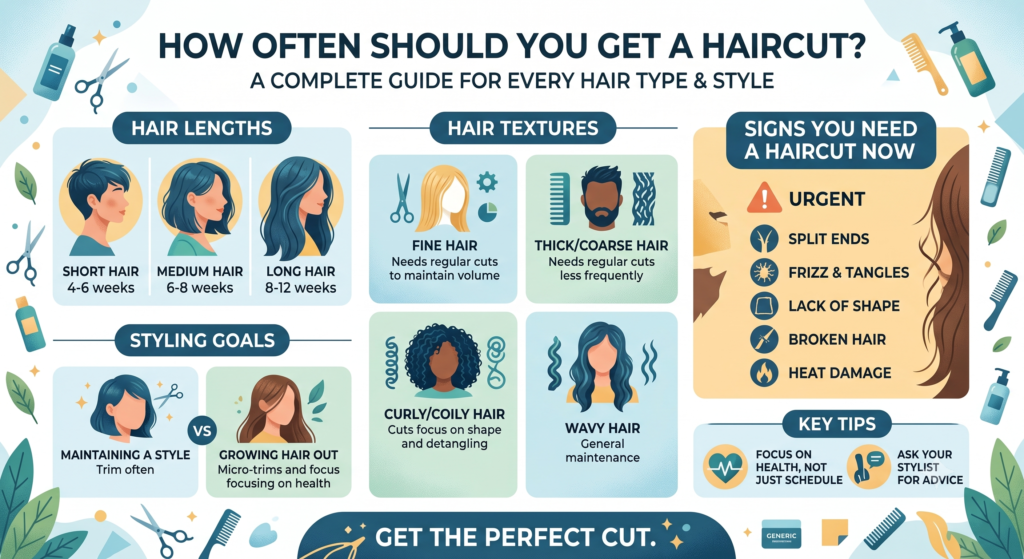
Why Regular Haircuts Matter
When you’re trying to maintain healthy, stylish, and manageable hair, one question comes up again and again: how often should you get a haircut? There isn’t one perfect answer for everyone. Your ideal haircut schedule depends on your hair length, texture, hairstyle, lifestyle, styling habits, and overall hair condition.
A professional haircut does more than simply change your appearance. Regular trimming can help remove damaged ends, maintain the shape of your hairstyle, and keep your hair looking polished. For people with short or highly structured hairstyles, even a small amount of growth can noticeably change the shape of the cut.
On the other hand, someone growing long hair may not need frequent major haircuts. Instead, occasional trims can help keep the ends neat while allowing the overall length to increase.
Hair Growth and Haircut Frequency
Hair generally grows from the roots, not from the ends. Therefore, cutting the ends doesn’t make hair grow faster from the scalp.
However, trimming damaged ends can make your hair appear healthier and help prevent existing split ends from traveling farther up the hair shaft. This is one reason people may feel their hair grows better after adopting a regular trimming routine.
So, when considering how often should you get a haircut, think about maintenance rather than simply hair growth.
Your stylist can assess your current haircut and recommend a schedule based on how quickly your style loses its shape.
Split Ends and Hair Health
Split ends are one of the clearest reasons to consider a trim. They can make the ends look dry, rough, frizzy, or uneven.
Common causes of split ends include:
- Frequent heat styling
- Excessive chemical processing
- Bleaching and coloring
- Lack of conditioning
- Rough towel drying
- Excessive brushing
- Environmental exposure
- Friction from clothing or bedding
Hair products can temporarily improve the appearance of damaged ends, but a split end cannot truly be repaired permanently. Removing the damaged section is the most reliable way to improve the appearance of the ends.
This is why understanding how often should you get a haircut is particularly important if you regularly color, straighten, curl, or chemically treat your hair.
Haircuts and Overall Style
Your hairstyle also determines your ideal haircut frequency.
A precise fade may look excellent immediately after a haircut but become noticeably different after a few weeks. Similarly, a sharp bob can lose its clean shape as the hair grows.
Long, layered hair usually offers more flexibility. A few weeks of growth may not dramatically change the overall appearance.
In other words, the answer to how often should you get a haircut depends as much on your desired look as it does on hair health.
If maintaining a particular shape is important to you, your stylist can create a personalized maintenance schedule.
How Often Should You Get a Haircut Based on Hair Type
One of the biggest mistakes people make is following a universal haircut schedule. Hair behaves differently depending on its texture, density, length, and natural pattern.
So, how often should you get a haircut if you have short, long, curly, fine, or thick hair? Let’s break it down.
Short Hair
Short hairstyles usually require more frequent maintenance because their shape is easy to notice as the hair grows.
If you wear a:
- Pixie cut
- Short crop
- Buzz cut
- Fade
- Taper
- Short bob
- Textured crop
you may need a haircut or cleanup every 3–6 weeks, depending on the style.
Very precise cuts may need maintenance closer to every three or four weeks, while a textured short hairstyle may remain attractive for longer.
For anyone with a short hairstyle, how often should you get a haircut is often determined by how quickly you want your edges, neckline, and overall shape to remain sharp.
Medium-Length Hair
Medium-length hair provides more flexibility.
Shoulder-length cuts, medium layers, and textured hairstyles can often go around 6–10 weeks between professional appointments.
However, if your ends become dry or your layers lose their shape, you may want an earlier trim.
A professional stylist can remove only the damaged ends without significantly reducing your overall length.
Long Hair
Long hair doesn’t necessarily require frequent full haircuts.
If you’re trying to maintain length, a light trim every 8–12 weeks may work well for many people. Those who experience significant dryness, breakage, or chemical damage may need more frequent maintenance.
If your goal is growing your hair longer, communicate this clearly with your stylist. Ask for a maintenance trim rather than a major restyle.
When deciding how often should you get a haircut for long hair, the condition of your ends is often more important than the length itself.
Curly and Wavy Hair
Curly and wavy hair can be more complicated because curls may shrink and behave differently depending on their pattern and moisture level.
Many people with curly hair prefer trims approximately every 8–12 weeks, although the ideal timing varies considerably.
Some curly hairstyles are specifically designed to maintain volume and shape. In these cases, a stylist experienced with textured hair can determine where and how much to trim.
It’s also worth discussing whether your hair should be cut wet or dry, as different techniques may produce different results.
Fine and Thin Hair
Fine hair can benefit from maintaining a clean shape. However, over-layering may sometimes make the hair appear less dense.
A trim every 6–10 weeks can be suitable for many people, depending on the style.
If your hair is fine and prone to breakage, focus on gentle care, appropriate conditioning, and reduced heat exposure alongside regular trims.
Thick Hair
Thick hair can often tolerate longer periods between haircuts, but that doesn’t mean it should be ignored.
Without regular maintenance, thick hair can become difficult to manage and may lose its intended shape.
Depending on your hairstyle, 6–10 weeks can be a useful starting point.
For thick hair, a professional stylist can also use layering or other cutting techniques to improve movement and manageability without making the hair look excessively thin.
How Often Should You Get a Haircut Based on Your Hairstyle

Your haircut itself may be the most important factor when deciding your maintenance schedule.
Someone with a classic long haircut may happily wait three months, while someone with a skin fade may want another appointment within two or three weeks.
Fades and Tapers
Fades and tapers are among the hairstyles that require the most frequent maintenance.
The gradual transition between different lengths becomes less defined as the hair grows.
For a consistently sharp appearance, many people choose a cleanup every 2–4 weeks.
A full haircut may not always be necessary. Sometimes a neckline, sideburn, and fade cleanup is enough to refresh the style.
Bobs and Sharp Cuts
A bob, blunt cut, or precision hairstyle depends heavily on clean lines.
If you want the shape to remain crisp, consider an appointment every 6–8 weeks.
If you prefer a softer, grown-out appearance, you can extend the time between appointments.
The key question isn’t only how often should you get a haircut, but also how precise you want the finished hairstyle to remain.
Layered Hairstyles
Layers can be surprisingly flexible.
Long layers may remain attractive for several months, while shorter layers can lose their shape faster.
A maintenance appointment every 8–12 weeks is a reasonable starting point for many layered hairstyles.
However, your stylist may recommend a different schedule based on your hair texture and styling routine.
Bangs and Fringes
Bangs are a different story.
Because they sit around the eyes and forehead, even a small amount of growth can change their appearance.
Some people trim bangs every 2–4 weeks, especially when maintaining a precise fringe.
If you’re growing your bangs out, you can obviously extend the schedule.
Chemical-Treated Hair
Hair that has been colored, bleached, straightened, relaxed, or treated with services such as keratin or smoothening may need special attention.
Chemical services can affect the hair’s strength and moisture balance. Regular trims can help remove visibly damaged ends, but trimming alone won’t protect chemically treated hair.
A good maintenance plan may include:
- Regular trims
- Suitable shampoo and conditioner
- Weekly or professional conditioning treatments
- Heat protection
- Reduced excessive heat styling
- Professional advice based on hair condition
If your hair has undergone multiple chemical services, ask a qualified stylist to assess its condition before deciding how often should you get a haircut.
9 Signs You Need a Haircut
Sometimes the calendar isn’t the best way to decide when to visit a salon. Your hair itself can tell you.
Here are nine common signs that it’s time for a professional trim.
1. You Notice Split Ends
If your ends are splitting, fraying, or looking uneven, a trim may be overdue.
2. Your Hairstyle Has Lost Its Shape
Does your haircut look great after styling but completely different the next morning?
Your original shape may have grown out.
3. Styling Takes Longer
If your hair suddenly becomes harder to style, your layers or overall shape may need refreshing.
4. Your Ends Feel Rough
Healthy-looking hair usually feels smoother toward the ends. Rough, dry ends can indicate damage.
5. Your Hair Looks Uneven
Uneven ends can become more obvious as hair grows.
6. Your Bangs Are Blocking Your Eyes
This is an easy one. If your fringe keeps falling into your eyes, it’s probably time for a trim.
7. Your Hair Feels Heavy
Thick or layered hair can sometimes become bulky as it grows. A professional cut can restore movement.
8. Your Hair Doesn’t Hold Its Style
If your usual hairstyle no longer sits correctly, your haircut may have grown out.
9. You’re Experiencing Excessive Breakage
Frequent breakage deserves attention. A stylist can help identify whether damaged ends, chemical processing, heat, or improper care may be contributing.
These signs can be more useful than following a strict calendar. Instead of asking only how often should you get a haircut, pay attention to how your hair looks, feels, and behaves.
How to Make Your Haircut Last Longer
Getting the right haircut is only part of the equation. Good home care can help maintain the appearance of your hair between salon visits.
Follow a Consistent Hair Care Routine
Use products appropriate for your hair type. Avoid washing with extremely hot water, and don’t aggressively rub wet hair with a towel.
Instead, gently squeeze out excess water and use a soft towel or microfiber towel where appropriate.
Use Heat Protection
Frequent heat styling can contribute to dryness and breakage.
If you’re using:
- Hair dryers
- Straighteners
- Curling irons
- Hot brushes
use a suitable heat-protection product and avoid unnecessary high heat.
Don’t Overuse Chemical Services
Color, bleaching, straightening, and other chemical treatments can transform your appearance, but they should be planned carefully.
Allow your hair time to recover when necessary, and work with a professional stylist when combining multiple services.
Schedule Professional Hair Treatments
Depending on your hair’s condition, professional services such as conditioning treatments, hair spa treatments, keratin services, or other suitable treatments may help improve manageability and appearance.
However, treatments should be selected according to your individual hair needs rather than simply following trends.
Protect Your Hair Between Appointments
Small habits can make a difference.
Try to:
- Avoid excessive brushing
- Detangle gently
- Use conditioner regularly
- Protect hair from excessive sun exposure
- Avoid constant tight hairstyles
- Sleep comfortably without creating unnecessary friction
- Trim damaged ends when necessary
The better you care for your hair, the easier it becomes to maintain your haircut.
How Often Should You Get a Haircut? Recommended Schedule
There isn’t a universal rule, but the following table provides a useful starting point.
| Hair Type / Hairstyle | Suggested Haircut Frequency |
|---|---|
| Skin fade | 2–3 weeks |
| Fade or taper | 3–5 weeks |
| Short haircut | 3–6 weeks |
| Bangs / fringe | 2–4 weeks |
| Bob / precision cut | 6–8 weeks |
| Medium-length hair | 6–10 weeks |
| Layered hair | 8–12 weeks |
| Long healthy hair | 8–12 weeks |
| Curly or wavy hair | 8–12 weeks |
| Damaged or chemically treated hair | Often 6–10 weeks, depending on condition |
These are general guidelines, not strict rules.
For example, someone with a fade who doesn’t mind a grown-out appearance may wait longer. Likewise, someone with long hair and heavily damaged ends may need an earlier appointment.
If you’re still wondering how often should you get a haircut, consider three things: your hairstyle, your hair condition, and the look you want to maintain.
For additional evidence-based hair-care information, you can also visit the American Academy of Dermatology hair-care resources.
Frequently Asked Questions
Does cutting hair make it grow faster?
No. Hair growth occurs from follicles in the scalp, so cutting the ends doesn’t increase the biological rate of growth.
However, removing damaged ends can make hair look healthier and reduce the appearance of breakage.
How often should men get a haircut?
Many men get a haircut every 3–6 weeks, but the ideal schedule depends on the hairstyle.
Fades and very short styles may need maintenance every 2–3 weeks, while longer or textured styles can often go 6–8 weeks.
How often should women get a haircut?
For many women, a trim every 6–12 weeks can be a practical starting point.
However, short precision styles may require more frequent visits, while long hair with minimal styling may need less frequent trims.
Should I cut my hair if I want to grow it long?
Yes, but you don’t necessarily need a major haircut.
Occasional trims can help remove damaged ends while allowing you to retain most of your length. Tell your stylist clearly that your goal is length retention.
How often should curly hair be cut?
Curly hair is often trimmed around every 8–12 weeks, although the ideal frequency varies according to curl pattern, hairstyle, shrinkage, and hair condition.
A stylist experienced with curly hair can recommend a schedule based on your individual texture.
Can regular haircuts prevent split ends?
Regular trims can remove existing split ends, but they can’t prevent all future damage.
Good hair care, heat protection, gentle handling, and appropriate chemical processing are also important.
Is trimming necessary for healthy hair?
Trimming isn’t required for hair to grow from the scalp, but it can improve the appearance and manageability of damaged or uneven ends.
For people who regularly use heat or chemical treatments, occasional professional trims can be particularly helpful.
What happens if I don’t cut my hair for a long time?
Your hair can continue growing, but the ends may become dry, split, uneven, or difficult to style.
How quickly this happens depends on your hair type, hairstyle, styling habits, and overall hair condition.
Is a haircut every month too frequent?
Not necessarily. A monthly appointment can make sense for short hairstyles, fades, precision cuts, or people who prefer a consistently polished appearance.
For long hair, however, a full haircut every month may be unnecessary unless you’re maintaining a specific shape.
How do I know the right haircut schedule for my hair?
Look at how quickly your hairstyle loses its shape, how your ends feel, and whether you notice split ends or excessive breakage.
A professional stylist can also assess your hair and recommend a personalized schedule.
Final Thoughts
So, how often should you get a haircut? The answer depends on your hair, your hairstyle, and your personal goals.
Short hairstyles, fades, and precision cuts usually need more frequent maintenance, while long and low-maintenance hairstyles can often go several weeks longer.
A good general approach is to schedule haircuts based on hair condition and style maintenance, rather than following a rigid calendar.
Remember, a haircut isn’t only about removing length. It’s about maintaining shape, improving manageability, removing damaged ends, and helping you feel confident in your appearance.
If you’re unsure about your ideal schedule, talk to a professional stylist. They can examine your hair’s texture, condition, length, and styling history and help you create a realistic maintenance routine.
Ultimately, the best answer to how often should you get a haircut is simple: get one when your hair needs it and when maintaining your desired style requires it.