
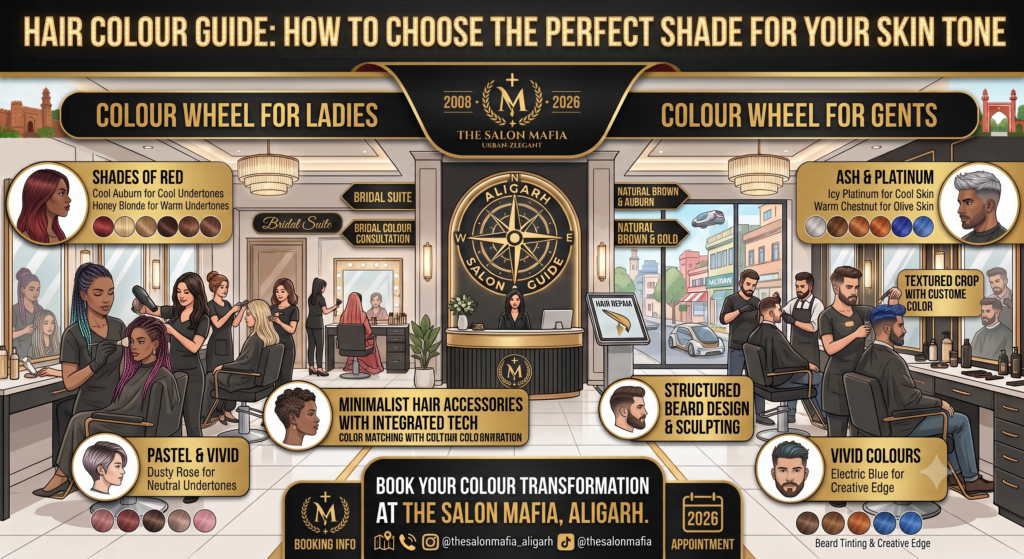
Changing your hair colour can completely transform your appearance. A new shade can make your features look sharper, bring attention to your eyes, brighten the complexion, or give an otherwise familiar hairstyle an entirely different personality. But there is one question that often gets overlooked before choosing a colour: Does this shade actually work with my skin tone and undertone? You may fall in love with a chocolate brown, copper, blonde, burgundy, or jet-black shade after seeing it online, only to discover that the same colour looks surprisingly different once it is on your own hair. That is not necessarily because the colour is wrong; it is because hair colour interacts with your complexion, natural hair pigment, eye colour, lighting, and even the condition of your hair.
The good news is that choosing a flattering hair colour does not have to feel like guessing. The first step is understanding the difference between skin tone and skin undertone. Skin tone describes how light or deep your complexion appears, while undertone refers to the subtle temperature underneath the surface—generally warm, cool, or neutral. Your visible skin tone can change somewhat with seasons and sun exposure, but your undertone is generally much more stable. Professional colour guidance commonly recommends considering undertone when deciding whether warm, cool, or balanced hair shades will harmonise with your complexion.
Think of your complexion as the background of a painting and your hair as one of the main colours placed in front of it. When the two work together, the whole image feels balanced. When they compete, your hair can appear too orange, too grey, too harsh, or simply disconnected from your face. That does not mean you have to follow rigid beauty rules. You can absolutely choose an unconventional colour if you love it. The purpose of understanding your skin tone is simply to give you a reliable starting point before you experiment.
Why Your Skin Tone Matters When Choosing Hair Colour
Hair colour is not an isolated feature. It sits directly around your face, which means its undertones can influence how your complexion appears. A warm golden-brown shade may create a sun-kissed effect on someone with warm undertones, while an ash brown may create a cleaner, cooler contrast on someone with a cool undertone. The same shade can produce a completely different visual effect on another person because the starting hair colour and complexion are different.
This is why choosing hair colour solely from a celebrity photograph can be risky. You might show your stylist a beautiful image of a rich caramel balayage, but your natural hair could be much darker, your undertone could be different, and the lighting in the photograph may be heavily edited. Professional colour guidance also emphasises that the starting hair colour and previous chemical processing can affect the final result, so the shade shown on a colour chart or model should not be treated as a guarantee.
A better approach is to break your decision into three questions: What is my skin tone? What is my undertone? What is my starting hair colour? Once you know these three things, the enormous world of hair colour becomes much easier to navigate.
Skin Tone vs. Skin Undertone
Your skin tone is the depth of your complexion. It is often described as fair, light, medium, tan, or deep. Your skin tone may appear slightly different throughout the year because of sun exposure, tanning, or seasonal changes.
Your undertone is different. It describes the subtle colour beneath the surface of your skin and is commonly classified as warm, cool, or neutral. Warm undertones often have golden, yellow, or peach characteristics. Cool undertones can have pink, red, bluish, or rosy characteristics. Neutral undertones sit somewhere between the two.
This distinction is important because two people can have the same skin depth but completely different undertones. For example, two people with medium skin may not look equally flattering in the same golden or ash-brown shade. One might have warm undertones, while the other may have cool or neutral undertones.
The Three Main Undertones
Warm undertones generally harmonise well with colours containing golden, copper, honey, caramel, chestnut, or warm reddish qualities. Cool undertones often pair naturally with ash, platinum, icy brown, cool burgundy, and other shades that do not introduce excessive gold or orange. Neutral undertones provide more flexibility because they can often accommodate both warm and cool colour families.
That does not mean these are strict rules. Hair colour is creative, and personal preference matters. The guidelines are best viewed as a map rather than a set of restrictions.
How to Identify Your Skin Undertone at Home
You do not necessarily need professional equipment to get a good idea of your undertone. Several simple observations can help. The important part is to perform these tests in natural daylight, because artificial lighting can make skin appear warmer, cooler, or more saturated than it really is.
The Vein Test
Look at the veins on the inside of your wrist or forearm in natural light. If they appear predominantly greenish, you may have warm undertones. If they look blue or purple, you may have cool undertones. If you see a mixture of blue and green or simply cannot identify one dominant colour, you may have neutral undertones. This test is widely used as a quick indication rather than a definitive scientific measurement.
Do not worry if your veins are difficult to see. Skin depth, lighting, and individual differences can make this test less obvious. Instead of relying on one test, combine several observations.
The Jewellery and White-Fabric Tests
Try comparing gold and silver jewellery against your face. If gold appears especially harmonious, you may lean warm. If silver appears more flattering, you may lean cool. If both look equally natural, you may be neutral. Jewellery is subjective, so use it as supporting evidence rather than your only test.
Another useful trick is to place a clean white fabric or sheet near your face while standing beside a window. A cool complexion may appear more pink, blue, or rosy against stark white, while a warm complexion may reveal more golden or yellow qualities. Again, look for a pattern across multiple tests instead of making a decision from one observation.
Best Hair Colours for Warm Skin Tones
Warm undertones often work beautifully with hair colours that contain warmth of their own. Think honey blonde, golden blonde, caramel, warm chocolate brown, chestnut, copper, cinnamon, auburn, and warm espresso. These shades can create a cohesive appearance because their golden, red, or earthy qualities echo the warmth already present in the complexion.
If you want blonde hair, consider shades such as honey blonde, golden beige, warm sandy blonde, or caramel blonde rather than extremely icy blonde. If you prefer brown, chocolate, chestnut, caramel brown, and warm mocha can be excellent starting points. For something bolder, copper and auburn can create a noticeable transformation while maintaining a warm visual relationship with the complexion.
Recent hair-colour guidance also highlights golden, earthy, and reddish colour families as particularly compatible with warm undertones.
Blonde, Brown and Red Shades for Warm Undertones
For a subtle change, warm brown with caramel highlights can add dimension without making the hair look dramatically different. For a stronger transformation, copper can create a striking effect. If you are unsure about going fully copper, try a copper-toned balayage or face-framing highlights first.
One mistake is assuming that every warm shade will automatically work. Excessive orange or overly saturated red can sometimes dominate the face. The ideal colour should complement your complexion rather than overpower it.
Best Hair Colours for Cool Skin Tones
Cool undertones can often pair beautifully with colours that have ash, smoky, icy, or blue-based characteristics. Popular options include ash brown, cool chocolate, mushroom brown, platinum blonde, ash blonde, beige blonde, cool black, burgundy, and certain cool red shades.
If you have always wanted blonde hair but worry about looking too yellow, a cooler blonde may be worth discussing with a professional colourist. Ash and platinum families can create a cleaner contrast against cool complexions. Similarly, cool brown can be a sophisticated alternative if you want something darker without introducing too much warmth.
Professional hair-colour guidance frequently describes ash, platinum, and champagne families as useful choices for cooler complexions, while cool colours can also help reduce the appearance of unwanted brassiness.
Blonde, Brown and Red Shades for Cool Undertones
For brunette hair, try cool espresso, ash brown, smoky brown, or cool mocha. If you want red, consider burgundy, wine, plum-red, or cooler auburn rather than highly orange copper.
Very warm golden or orange shades are not automatically forbidden, but they may create more contrast against cool skin. If you love those colours, a professional can adjust the formulation or use strategic highlights so the overall result remains balanced.
Best Hair Colours for Neutral and Olive Skin Tones
Neutral undertones offer considerable freedom. Because the complexion sits between warm and cool, you can often experiment with both colour families. Neutral brown, chocolate, beige blonde, sandy blonde, soft caramel, champagne, balanced brunette, and subtle auburn can all be possibilities.
Neutral undertones are particularly useful if you enjoy changing your look regularly. You may be able to move from warm caramel to cooler brunette without creating the same level of contrast that someone with a strongly warm or cool undertone might experience. L’Oréal Paris and Wella both describe neutral complexions as having greater flexibility across warm and cool colour families.
Olive skin deserves a little extra attention because olive complexions can contain greenish, golden, or muted undertones. Depending on the individual, olive skin can work with earthy browns, neutral chocolate, beige, caramel, and carefully selected cooler shades. The key is to assess the exact undertone rather than assuming every olive complexion is automatically warm.
Flexible Shades That Complement Neutral Complexions
If you want a safe starting point, neutral brown is one of the easiest options. It is sophisticated, wearable, and can be customised lighter or darker. Sandy blonde is another interesting option because it can be adjusted warmer or cooler; current colour guidance describes sandy blonde as a balanced combination of beige, golden, and slightly ashy qualities.
For a more dimensional result, ask about balayage rather than a single flat colour. Different tones can be blended through the hair, creating movement and allowing your stylist to place warmth or coolness exactly where it is most flattering.
Choosing Hair Colour According to Your Skin Depth
Once you understand undertone, consider your overall skin depth. Fair, light, medium, tan, and deep complexions can all wear a wide variety of colours, but contrast can change the final effect.
Fair skin can create a dramatic look with deep brunette or black, while soft blonde and light brown can create a gentler appearance. Medium and tan skin can work beautifully with chocolate, caramel, chestnut, copper, and dimensional brunette shades. Deep complexions can look striking with rich espresso, chocolate, burgundy, plum, warm brown, copper accents, and carefully selected lighter highlights.
The important point is not to reduce hair colour to a simple “one shade fits one complexion” chart. Your undertone, eye colour, natural hair, maintenance preferences, and desired level of contrast all matter.
How Your Natural Hair Colour Changes the Result
Your current hair colour is one of the most important parts of the equation. A colour formula applied to virgin light-brown hair will not necessarily produce the same result on previously coloured black hair. The same applies to hair that has been bleached, chemically straightened, highlighted, or repeatedly coloured.
If you are moving from dark hair to a much lighter shade, the process may require lifting or bleaching. The darker the starting colour, the more complex the transformation may become. Professional guidance warns that dramatic lightening can require multiple steps, particularly when the existing hair contains artificial colour.
This is where a professional consultation becomes valuable. A colourist can assess your starting level, previous colour history, hair condition, and desired result before deciding how aggressively the hair needs to be lifted.
Balayage, Highlights and Face-Framing Colour
You do not always need to colour your entire head to change your appearance. Balayage, highlights, lowlights, babylights, ombré, and face-framing pieces can create a major visual difference while allowing your natural base to remain visible.
Face-framing highlights are especially useful if you want to brighten the appearance around your face without committing to an all-over transformation. A stylist can select warmer or cooler pieces based on your complexion and place them around the areas that naturally catch light.
Balayage can also be a practical choice for people who want dimension without a strong root line. Instead of one solid block of colour, different tones gradually blend through the lengths. This creates movement and can make the hair appear fuller and more textured.
How to Choose Between Warm, Cool and Neutral Hair Colour
If you are still confused, start with the effect you want. Do you want your hair to look sun-kissed and glowing? Warm colours may be a natural direction. Do you want a sleek, sophisticated, smoky appearance? Cooler shades may be worth exploring. Do you want versatility with minimal concern about undertone clashes? Neutral shades can provide a balanced starting point.
Your wardrobe can also offer clues. Think about the clothing colours that consistently make you feel confident. If warm beige, cream, camel, rust, coral, and earthy greens look particularly harmonious, you may lean warm. If navy, crisp white, cool pink, blue, lavender, and jewel tones work exceptionally well, you may lean cool.
Do not treat these observations as absolute rules. Hair colour is personal, and your stylist can modify a shade to suit your preferences.
Common Hair Colour Mistakes to Avoid
One of the biggest mistakes is choosing a colour solely because it looks good on someone else. Hair colour depends on the canvas beneath it, and your canvas is different. Starting hair colour, previous colour treatments, porosity, texture, and condition can all affect the result. Wella specifically recommends considering the starting colour and checking a shade’s expected result rather than relying only on the model shown on a colour package.
Another common mistake is making a dramatic change without considering maintenance. Platinum blonde may look stunning, but it can require regular toning and root maintenance. Deep brunette is easier to maintain for some people, but a future transition to blonde can become much more complicated if the hair has accumulated dark artificial pigment.
Finally, avoid skipping the strand-test stage when making a major change. A strand test can help reveal how the formula interacts with your particular hair before the entire head is processed. It is one of the simplest ways to reduce unpleasant surprises.
How to Prepare Before a Hair Colour Appointment
Before visiting a salon, collect two or three reference photographs showing the colour you actually want, not just the hairstyle. Ideally, choose images where the hair is visible in relatively natural lighting. Tell your stylist whether your hair has been coloured, bleached, chemically straightened, smoothed, or treated in the past.
Also be honest about your expectations. If your natural hair is very dark and you want an extremely light blonde in a single appointment, a professional should explain what is realistically achievable while protecting the condition of your hair.
Bring your questions. Ask what level of maintenance the shade requires, how often it needs refreshing, whether toner will be needed, and what home-care products are recommended. A great colour result is not only about the first day; it is about how the shade looks weeks later.
How to Maintain Your New Hair Colour
Once you have your ideal colour, maintenance becomes the next priority. Coloured hair can gradually lose vibrancy because of washing, heat styling, environmental exposure, and normal wear. The right routine depends on your colour family.
Cool blonde and ash shades may need periodic toning to manage unwanted warmth. Vibrant reds and copper shades can require more frequent colour maintenance because their intensity can change over time. Brunette shades may be easier to maintain, but they can still benefit from colour-safe cleansing and regular conditioning.
Avoid treating coloured hair as though nothing has changed. Gentle washing, appropriate conditioning, heat protection, and salon-recommended maintenance can help your colour remain attractive between appointments.
Hair Colour Comparison Table
| Skin Undertone | Hair Colour Families to Explore | Example Shades | Overall Effect |
|---|---|---|---|
| Warm | Golden, copper, caramel, warm brown | Honey blonde, chestnut, caramel, copper | Warm, radiant, sun-kissed |
| Cool | Ash, icy, smoky, cool brunette | Ash brown, platinum, espresso, burgundy | Crisp, sophisticated, balanced |
| Neutral | Balanced warm and cool shades | Sandy blonde, neutral brown, beige, chocolate | Versatile and harmonious |
| Olive | Earthy, neutral, selected warm/cool shades | Chocolate, caramel, mocha, beige | Rich and dimensional |
| Fair | Depends strongly on undertone | Ash blonde, honey, brunette, copper | Can range from soft to dramatic |
| Medium/Tan | Broad range with undertone matching | Caramel, chocolate, auburn, balayage | Rich and luminous |
| Deep | Rich dark shades and controlled highlights | Espresso, chocolate, burgundy, copper accents | Bold, polished, dimensional |
Conclusion
Choosing the perfect hair colour is much easier when you stop thinking only about the name of the shade and start thinking about the relationship between the colour and your complexion. Your skin tone tells you about the depth of your complexion, while your undertone helps you understand whether warm, cool, or neutral shades are likely to create harmony. From there, your natural hair colour, eye colour, previous chemical treatments, desired maintenance level, and personal style complete the picture.
The most important lesson is that there is no single hair colour that everyone with a particular skin tone must wear. A warm complexion does not mean you are forbidden from wearing ash blonde, and a cool complexion does not mean copper is completely off-limits. Instead, understanding colour theory gives you more control. Your stylist can adjust depth, tone, placement, and dimension to create a result that reflects both your complexion and your personality.
Before your next transformation, identify your undertone, examine your current hair, collect realistic reference images, and discuss your goals with a professional colourist. If you are making a dramatic change—especially from dark hair to very light blonde—professional assessment is particularly useful because the starting colour and previous processing can significantly affect the process and final result.
Ultimately, the perfect hair colour is not necessarily the trendiest shade on social media. It is the shade that makes you look in the mirror and feel like the colour belongs to you.
Frequently Asked Questions
Can anyone wear blonde hair?
Yes. Blonde can be adapted to many different complexions by changing its depth and undertone. Someone with warm undertones might prefer honey, golden, or caramel blonde, while someone with cool undertones may prefer ash, platinum, or cooler beige. Neutral undertones can often move between both directions. The starting hair colour and hair condition should also be considered before attempting a major lightening service.
Which hair colour makes the face look brighter?
There is no universal shade that brightens every complexion. In general, a colour that harmonises with your undertone can create a more balanced appearance. Warm complexions may respond well to golden, honey, caramel, or copper tones, while cool complexions may suit ash, icy, or cool brunette shades. Strategic face-framing highlights can also create brightness without changing the entire head of hair.
Is hair colour better matched to skin tone or undertone?
Both matter, but undertone is particularly useful for deciding whether the hair should lean warm, cool, or neutral. Skin tone helps determine the overall depth and contrast you may want. Combining both gives a more personalised result than relying on either one alone.
How often should coloured hair be refreshed?
The timing depends on the colour, growth rate, technique, and maintenance goals. Root-heavy all-over colours generally require more visible maintenance than blended balayage. Fashion colours, copper, reds, and cool blondes may also need more frequent refreshing or toning to maintain their desired appearance. Your stylist can recommend a schedule based on the specific formula and technique used.
Should dark hair be bleached to become blonde?
A significant transition from dark hair to blonde may require lightening or bleaching, but the exact process depends on the starting colour and whether the hair contains artificial pigment. Trying to make a dramatic change too quickly can compromise hair condition. A professional colourist can determine how much lifting is realistically possible and whether the transformation should be completed in stages.