
Introduction
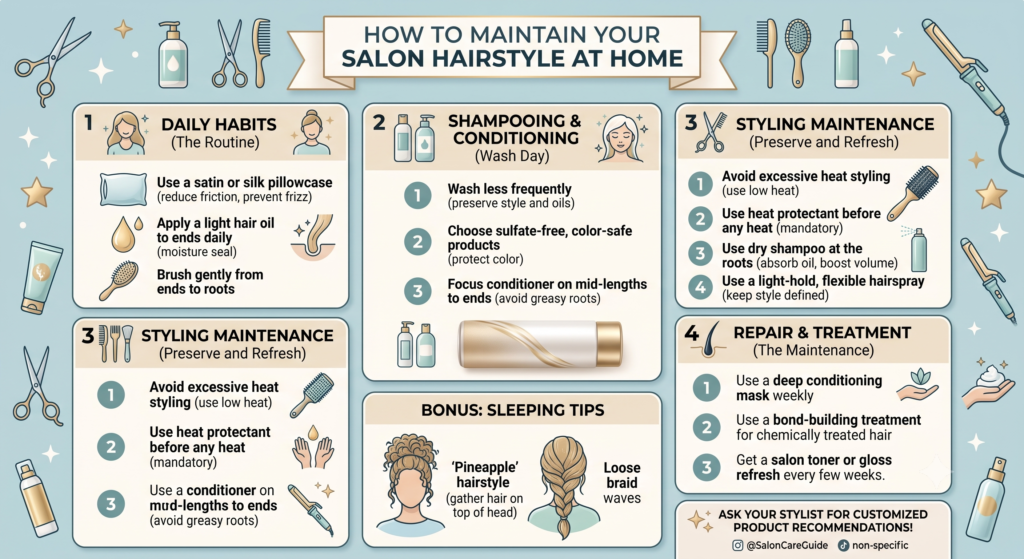
A professional salon hairstyle can completely transform your look, but keeping that fresh-from-the-salon finish at home takes the right routine. Whether you’ve had a haircut, blow-dry, smoothening, keratin treatment, hair colour, or a special occasion hairstyle, proper aftercare can help your style stay polished for longer.
The good news is that you don’t need an expensive collection of products or complicated techniques. With a few smart habits, you can maintain your salon hairstyle at home, protect your hair from damage, and keep your overall look fresh between appointments.
This guide explains practical, easy-to-follow steps that work for different hair types and salon services.
Why Salon Hairstyle Maintenance Matters
A professional hairstyle isn’t created only during your salon appointment. The way you wash, dry, brush, sleep, and style your hair afterward has a major effect on how long the look lasts.
Even a simple haircut can lose its shape if your hair becomes dry, damaged, or difficult to manage. Likewise, chemically treated hair needs extra care because excessive washing, heat, and harsh products can reduce softness and shine.
If you’ve invested time and money in a salon service, it’s worth protecting the result.
Your Home Routine Affects Your Salon Results
Think of your salon appointment as the foundation. Your home routine is what keeps that foundation looking good.
For example:
- A good haircut needs regular trimming.
- Coloured hair needs colour-safe products.
- Keratin-treated hair needs gentle cleansing.
- Curly hair needs moisture and definition.
- Blow-dried hair needs protection from humidity and heat.
- Styled hair needs careful brushing and sleeping habits.
There’s no one-size-fits-all routine. Your ideal maintenance plan depends on your hair type, texture, condition, and the service you’ve received.
Understand Your Hair Type First
Before buying products, identify what your hair actually needs.
| Hair Type | Common Need | Recommended Care |
|---|---|---|
| Straight | Volume and shine | Lightweight products |
| Wavy | Definition and moisture | Hydrating products |
| Curly | Moisture and frizz control | Curl-friendly products |
| Dry | Hydration | Nourishing shampoo and conditioner |
| Oily | Scalp cleansing | Gentle, balancing shampoo |
| Coloured | Colour protection | Colour-safe products |
| Chemically treated | Strength and moisture | Professional aftercare |
Understanding your hair makes your routine much easier. After all, using the wrong products can sometimes create more problems than they solve.
Follow the Right Washing Routine
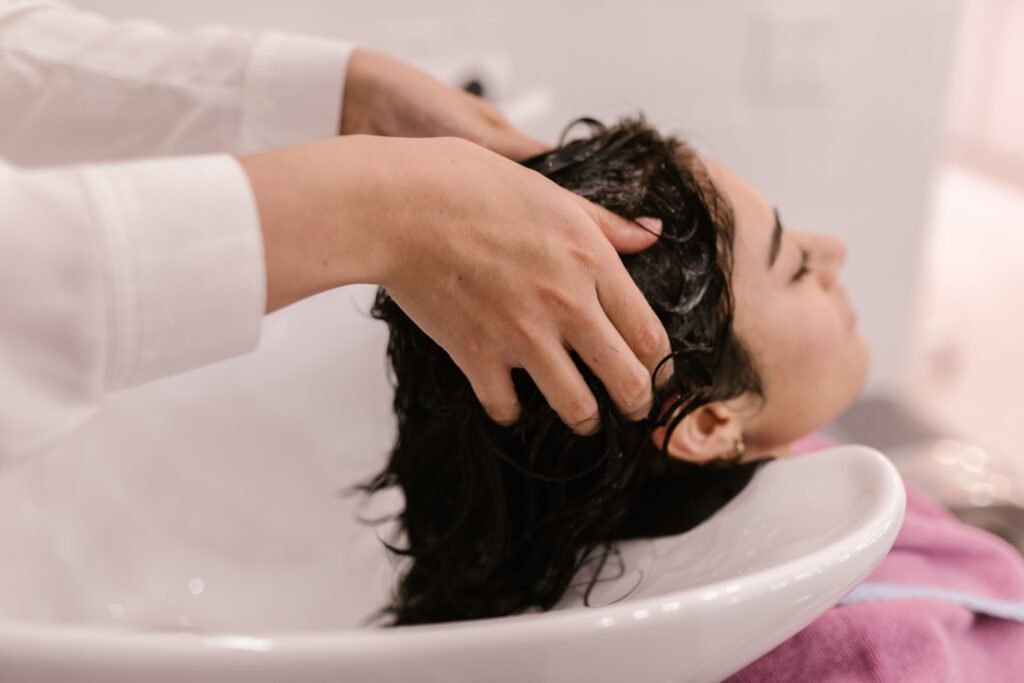
One of the most important ways to maintain your salon hairstyle at home is to develop a suitable washing routine.
Washing your hair too frequently may remove natural oils and leave the lengths dry. On the other hand, avoiding shampoo for too long can cause scalp buildup, oiliness, and an uncomfortable feeling.
Your ideal washing frequency depends on your scalp, lifestyle, climate, and hair type.
Choose the Right Shampoo
Don’t choose shampoo only because it smells good or has attractive packaging.
Look for products that suit your specific hair needs. If your hair has been coloured or chemically treated, ask your hairstylist about suitable professional aftercare.
A gentle shampoo can help cleanse the scalp without unnecessarily stripping the hair.
Use Conditioner Correctly
Conditioner is especially important for the mid-lengths and ends.
Apply it mainly to the lengths rather than heavily coating the scalp. Leave it on for the recommended time and rinse thoroughly.
For dry or damaged hair, you can also consider a weekly deep-conditioning treatment.
Avoid Extremely Hot Water
Hot water can leave hair feeling dry and rough. Lukewarm water is generally a better choice for regular hair washing.
A cool or lukewarm final rinse can also make the hair feel smoother, although the most important factor is avoiding excessively hot water.
Protect Your Hair While Sleeping
Your hairstyle doesn’t stop needing care when you go to bed.
Friction between your hair and pillow can contribute to frizz, tangling, and breakage. This can be particularly noticeable if you have long, textured, or chemically treated hair.
Simple Night-Time Habits
Try these easy habits:
- Gently brush or detangle your hair before sleeping.
- Avoid tying your hair extremely tightly.
- Use a loose braid or soft ponytail when appropriate.
- Consider a satin or silk pillowcase.
- Don’t sleep with soaking-wet hair.
- Remove heavy styling accessories before bed.
For certain hairstyles, your stylist may recommend a specific sleeping technique. Follow those instructions because the best method can vary depending on the service.
Use Heat Styling Carefully
Hair dryers, straighteners, curling irons, and hot brushes can make styling quick and easy. However, repeated high heat can contribute to dryness and damage.
If you regularly use heat styling tools, use a suitable heat-protection product and avoid unnecessarily high temperatures.
Better Heat-Styling Practices
- Apply heat protectant before styling.
- Don’t repeatedly pass a straightener over the same section.
- Keep the tool moving.
- Avoid styling soaking-wet hair with tools that aren’t designed for wet hair.
- Give your hair heat-free days.
- Use the lowest effective temperature.
- Keep hot tools clean.
Remember, more heat doesn’t necessarily mean better styling. Controlled technique usually produces a better result.
Maintain Your Haircut and Shape
Even the best haircut eventually loses its original shape as hair grows.
Regular trims can help maintain layers, fringes, face-framing sections, and other details of your hairstyle.
How often you need a trim depends on your haircut and growth pattern. Short, structured styles may require more frequent maintenance than longer hairstyles.
If you have bangs, a pixie cut, bob, or highly layered style, don’t wait until the shape becomes difficult to manage.
Don’t Experiment With DIY Cutting
This one is tempting—but proceed with caution!
Cutting your own bangs or attempting to recreate professional layers can easily result in uneven sections. A professional stylist understands weight distribution, texture, face shape, and the way hair moves.
When your hairstyle needs reshaping, it’s usually better to book a professional appointment.
Keep Salon Hair Colour Looking Fresh
Fresh salon colour can make hair look vibrant, glossy, and polished. However, colour maintenance requires some extra attention.
Frequent washing, excessive heat, sun exposure, and unsuitable products can affect the appearance of coloured hair.
Tips for Coloured Hair
Use products specifically recommended for colour-treated hair and avoid unnecessary washing.
When possible:
- Protect hair from prolonged sun exposure.
- Use heat protection.
- Avoid extremely hot water.
- Follow your stylist’s recommended maintenance schedule.
- Use a nourishing conditioner.
- Don’t experiment with strong chemical treatments at home.
If your colour includes highlights, balayage, fashion tones, or other specialised techniques, professional advice becomes even more valuable.
Caring for Keratin and Smoothened Hair
Keratin, smoothening, and other professional hair treatments can change the way your hair looks and behaves. The correct aftercare helps preserve the desired finish.
Your stylist should tell you when to wash your hair after the service and which products are suitable.
Depending on the treatment, you may need to avoid certain shampoos, excessive heat, or unsuitable chemical services.
Don’t Guess Your Aftercare
Different treatments have different formulations and instructions. So, don’t assume that every keratin or smoothening service should be maintained in exactly the same way.
Ask your salon:
- When should I wash my hair?
- Which shampoo should I use?
- Can I tie my hair immediately?
- How frequently should I use heat?
- When should I return for maintenance?
- Which treatments should I avoid?
Professional aftercare advice is often more useful than generic internet tips.
Maintain Curly and Wavy Hairstyles
Curly and wavy hair can look stunning, but texture needs moisture and gentle handling.
Brushing curly hair aggressively when it’s completely dry can disturb the curl pattern and increase frizz.
Instead, consider detangling gently with a wide-tooth comb when your hair is damp and conditioned, depending on your curl pattern and routine.
Keep Curls Defined
A simple curly-hair routine may include:
- Gentle cleansing.
- Regular conditioning.
- A suitable leave-in product.
- Minimal aggressive brushing.
- Gentle scrunching.
- Air-drying or controlled diffusing.
- Avoiding excessive heat.
The goal isn’t to force your natural texture into a particular shape. It’s to support the texture you already have.
Use Hair Products in Moderation
More product doesn’t automatically mean better hair.
Too much serum, wax, mousse, spray, or styling cream can make hair look heavy or greasy and may lead to buildup.
Start with a small amount and add more only if necessary.
Match the Product to the Style
| Styling Goal | Possible Product Type |
|---|---|
| Smoothness | Hair serum |
| Volume | Volumising mousse |
| Hold | Styling spray |
| Texture | Styling wax or cream |
| Curl definition | Curl cream |
| Heat protection | Heat protectant |
| Hydration | Leave-in conditioner |
The right product depends on your hair texture and desired finish.
Protect Your Hair From Sun and Pollution
Daily exposure to sunlight, dust, pollution, and environmental changes can affect the appearance and feel of your hair.
If you’re outdoors for long periods, consider practical protection such as a scarf, hat, or suitable hair product.
This is especially useful for coloured and chemically treated hair.
If you live in a city with significant pollution or dust, regular but gentle cleansing of the scalp can also be important.
Schedule Regular Salon Maintenance
Home care is essential, but it can’t completely replace professional maintenance.
Your hairstylist can assess your hair’s condition, remove damaged ends, refresh your haircut, and recommend adjustments to your routine.
Depending on your hairstyle, you may need:
- Regular trims.
- Root touch-ups.
- Hair spa treatments.
- Colour maintenance.
- Glossing services.
- Deep-conditioning treatments.
- Professional styling.
- Treatment-specific aftercare.
A professional can also identify problems before they become difficult to manage.
Common Mistakes to Avoid
Even with good intentions, certain habits can shorten the life of your hairstyle.
1. Washing Hair Too Frequently
Overwashing may leave some hair types dry and difficult to style.
2. Using Too Much Heat
Daily high-temperature styling can make hair feel dry and brittle.
3. Skipping Conditioner
Shampoo cleans the hair, but conditioning helps improve softness and manageability.
4. Sleeping With Wet Hair
Wet hair is more vulnerable to friction and tangling.
5. Using Random Products
A product that works beautifully for one person may not suit your hair.
6. DIY Chemical Treatments
Home chemical treatments can produce unpredictable results and may cause damage when incorrectly applied.
7. Ignoring the Scalp
Healthy-looking hair starts with proper scalp care. If you experience persistent scalp problems, consult a qualified professional or dermatologist.
Simple Weekly Hair Care Routine
You don’t need a complicated 20-step routine.
Here’s an easy example:
| Day | Hair Care Focus |
|---|---|
| Monday | Gentle wash + conditioner |
| Tuesday | Minimal styling |
| Wednesday | Scalp and hair check |
| Thursday | Gentle wash if required |
| Friday | Heat-free styling |
| Saturday | Deep-conditioning treatment |
| Sunday | Rest and gentle detangling |
You can adjust this schedule based on your hair type and lifestyle.
A Simple Daily Routine
Morning:
Gently detangle your hair and use a small amount of suitable styling product if needed.
During the day:
Protect your hair from unnecessary heat, excessive sun, and environmental exposure.
Evening:
Remove styling accessories and gently detangle your hair.
Night:
Use a loose hairstyle and avoid excessive friction.
Consistency matters more than complexity.
Professional Tips for Long-Lasting Results
Experienced hairstylists generally focus on three things: protection, hydration, and consistency.
1. Protect Before Styling
Whether you’re using a blow dryer or a straightener, preparation matters.
2. Don’t Overprocess Hair
Repeated chemical services without adequate recovery time can compromise hair quality.
3. Keep Hair Hydrated
Conditioning and suitable treatments can improve the look and manageability of dry hair.
4. Use Professional Advice
Your hairstylist has seen your actual hair condition. Their recommendations can therefore be more personalised than generic advice.
5. Know When to Stop Styling
If your hair starts feeling unusually dry, rough, brittle, or weak, reduce heat and chemical exposure and seek professional advice.
For additional general information about hair and scalp health, you can also explore resources from the American Academy of Dermatology.
Frequently Asked Questions
1. How can I maintain my salon hairstyle at home?
Use the right shampoo and conditioner, limit heat styling, protect your hair while sleeping, avoid unnecessary chemical treatments, and follow your stylist’s aftercare instructions.
2. How often should I wash my hair after a salon treatment?
It depends on the treatment, hair type, and scalp condition. Follow the specific washing instructions provided by your stylist.
3. How can I make my salon blow-dry last longer?
Avoid unnecessary moisture, excessive touching, and humidity where possible. Sleeping carefully and using appropriate styling products can also help extend the look.
4. Should I use heat protectant every time I style my hair?
Yes. If you’re using heated styling tools, a suitable heat-protection product is a smart part of your routine.
5. How often should I trim my hair?
There’s no universal schedule. Short and structured hairstyles often need more frequent maintenance, while longer styles may go longer between trims.
6. Can I use regular shampoo after keratin treatment?
Don’t assume that every shampoo is suitable. Ask your stylist which shampoo and conditioner are recommended for your specific treatment.
7. How can I reduce frizz at home?
Use suitable conditioning products, avoid excessive heat, dry your hair gently, and avoid aggressive brushing. Your stylist can also recommend products based on your hair texture.
8. Is it okay to sleep with wet hair?
It’s better to let your hair dry before sleeping whenever possible. Wet hair can be more vulnerable to friction and tangling.
9. How can I keep coloured hair looking fresh?
Use colour-friendly products, avoid excessive washing and heat, protect your hair from prolonged sun exposure, and maintain your colour professionally when needed.
10. Can home care completely replace salon visits?
Not always. Home care helps maintain your hairstyle, but professional trims, colour maintenance, and treatment services may still be necessary depending on your hairstyle.
Conclusion
Maintaining a beautiful salon hairstyle doesn’t have to be complicated. The secret is consistent, gentle, and personalised hair care.
Start by understanding your hair type and the salon service you’ve received. Then build a simple routine around gentle cleansing, conditioning, heat protection, careful styling, and regular professional maintenance.
Whether you have a sleek bob, layered haircut, coloured hair, smoothened hair, curls, or a special occasion style, the right habits can help you enjoy your salon look for longer.
Most importantly, don’t chase perfection. Healthy, manageable hair is always the best foundation for great styling.
With the right routine and professional guidance, you can maintain your salon hairstyle at home and keep your hair looking polished, fresh, and confident between salon appointments.