Introduction
Dry, frizzy and damaged hair can make even a simple hairstyle feel difficult to manage. Heat styling, chemical treatments, coloring, pollution, hard water, sun exposure and improper hair care can gradually affect the hair’s natural moisture and strength.
The good news is that damaged-looking hair doesn’t always mean you need to cut it all off. With the right professional treatment, consistent home care and a better hair routine, you can improve the appearance, softness and manageability of your hair.
This guide explores the best hair treatments for dry, frizzy and damaged hair, including keratin, hair spa, hair botox, smoothening, protein treatments and other effective options. We’ll also explain which treatment may suit different hair concerns and how to maintain your results.
Understanding Dry, Frizzy and Damaged Hair
Dryness, frizz and damage often appear together, but they’re not exactly the same problem.
Dry hair lacks sufficient moisture and may feel rough, dull or difficult to style. Frizzy hair happens when strands become unruly and don’t lie smoothly together. Damaged hair has weakened areas caused by physical, chemical or environmental stress.
When these problems occur together, your hair may look dull, feel rough and become harder to comb.
Common Causes of Hair Damage
Several everyday habits can contribute to dry and damaged hair:
- Frequent use of straighteners and curling irons
- Blow-drying at very high temperatures
- Repeated hair coloring or bleaching
- Chemical treatments without proper aftercare
- Excessive sun exposure
- Chlorinated or hard water
- Overwashing the hair
- Using harsh shampoos
- Rough towel drying
- Aggressive brushing
- Lack of conditioning
- Poor maintenance after salon treatments
Heat is one of the biggest concerns. Repeated exposure can affect the hair’s outer protective layer and leave strands looking rough.
Chemical processing can also weaken hair when performed too frequently or without professional assessment.
Signs Your Hair Needs Professional Care
You may benefit from professional hair care if you notice:
- Excessive frizz
- Split ends
- Rough texture
- Lack of shine
- Frequent tangling
- Hair that feels unusually dry
- Breakage while brushing
- Difficulty maintaining hairstyles
- Extremely porous-looking strands
- Hair that feels weak after coloring or chemical services
However, it’s important to remember that salon treatments aren’t magic fixes. Severely split or broken ends may still need trimming, while underlying scalp conditions may require professional medical advice.
10 Best Hair Treatments for Dry, Frizzy and Damaged Hair
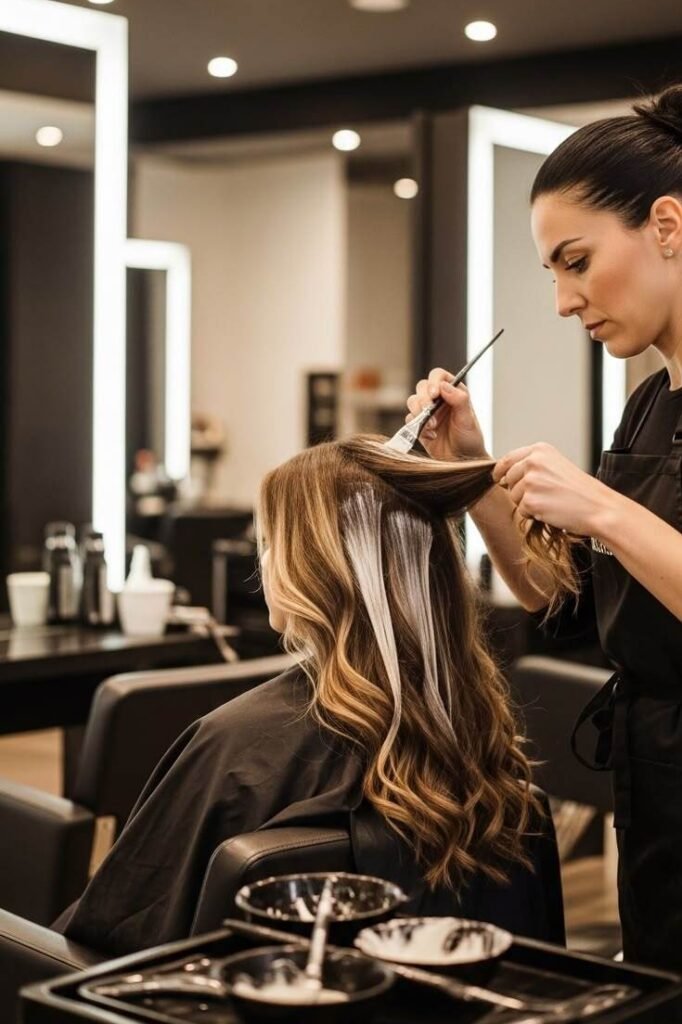
Choosing the right treatment depends on your hair’s condition, texture, history and desired result. A good stylist should examine your hair before recommending a chemical service.
Here are ten popular options to consider.
1. Hair Spa Treatment
A professional hair spa is one of the easiest places to start when your primary concern is dryness and dullness.
A typical hair spa may include cleansing, conditioning, a nourishing mask and scalp massage. The exact process varies between salons and products.
Benefits of Hair Spa
- Helps improve softness
- Adds temporary moisture
- Makes hair easier to comb
- Can improve shine
- Helps reduce the appearance of dryness
- Provides a relaxing scalp-care experience
Hair spa is especially useful when your hair feels dry but isn’t severely chemically damaged.
For best results, regular maintenance matters more than doing one treatment occasionally and expecting permanent transformation.
2. Keratin Treatment
Keratin treatments are popular among people who want smoother, more manageable hair.
The treatment is designed to improve the appearance of frizz and create a smoother finish. Depending on the formulation and technique, results can vary significantly.
Keratin can be particularly attractive if your biggest concerns are:
- Frizz
- Rough texture
- Difficult styling
- Excessive volume
- Lack of smoothness
Is Keratin Suitable for Damaged Hair?
Not every damaged head of hair is suitable for a chemical smoothing service.
If your hair is severely weakened, your stylist may recommend strengthening and conditioning first. A professional consultation is important before proceeding.
3. Hair Botox
Despite its name, hair botox doesn’t involve injectable Botox.
It’s generally used as a marketing term for intensive conditioning or rejuvenating hair treatments designed to improve the appearance and feel of dry, frizzy or tired-looking hair.
Depending on the product, formulations may contain conditioning ingredients, proteins, amino acids or other cosmetic ingredients.
Why People Choose Hair Botox
It may help hair look:
- Smoother
- Shinier
- Softer
- More manageable
- Less frizzy
It’s often considered by people who want a smoother appearance without necessarily choosing a very straight finish.
4. Hair Smoothening
Hair smoothening is designed to reduce frizz and make hair easier to manage.
It’s commonly chosen by people with wavy, curly or unruly hair who want a smoother styling result.
However, smoothening is generally a chemical service, so hair history matters.
A stylist should consider previous:
- Bleaching
- Coloring
- Straightening
- Keratin services
- Perming
- Other chemical processes
before recommending the service.
5. Protein Treatment
Hair is primarily made of a protein called keratin. Protein-focused cosmetic treatments can help improve the feel and appearance of weakened hair.
They’re often considered when hair feels:
- Weak
- Limp
- Overprocessed
- Difficult to manage
- Prone to breakage
But more protein isn’t automatically better.
Overusing strengthening treatments without balancing moisture can leave some hair types feeling stiff or rough. That’s why professional assessment is useful.
6. Nanoplastia
Nanoplastia has become increasingly popular among people looking for smoother, shinier and more manageable hair.
It’s generally positioned as a smoothing and conditioning service, although formulations and techniques differ between brands and salons.
Potential cosmetic benefits can include:
- Reduced frizz
- Increased smoothness
- Improved shine
- Easier styling
- A more polished appearance
Because it’s still a professional chemical/smoothing service, your stylist should evaluate the condition of your hair before treatment.
7. Intensive Hair Mask Treatment
A professional hair mask can be a simple but effective option for dry hair.
Hair masks are usually more intensive than everyday conditioners and can contain ingredients designed to improve softness, conditioning and manageability.
Hair Mask vs Conditioner
A conditioner is generally used as part of regular washing.
A hair mask is typically used less frequently and is formulated as a deeper conditioning step.
If your hair is dry, adding an appropriate mask to your routine can help maintain softness between salon appointments.
8. Bond-Building Treatment
Bond-building treatments are designed around the idea of supporting damaged hair structures during or after chemical processing.
They’re particularly relevant for people who frequently:
- Bleach their hair
- Highlight their hair
- Color their hair
- Use chemical services
These products shouldn’t be treated as a complete solution for severely damaged hair, but they can be useful as part of a broader professional hair-care routine.
9. Scalp and Hair Detox
Product buildup, excess oil, pollution and environmental residue can make hair feel heavy and dull.
A professional cleansing or detox service can help remove buildup and prepare the hair for conditioning.
However, aggressive or excessive cleansing can contribute to dryness.
The goal isn’t to strip the hair repeatedly. Instead, cleansing should be balanced with appropriate conditioning.
10. Deep Conditioning Treatment
Deep conditioning is one of the most practical choices for people whose main concern is dryness.
It can be performed professionally or incorporated into an appropriate home routine.
Deep Conditioning Can Help With
- Rough texture
- Dry ends
- Frizz caused by dryness
- Poor manageability
- Lack of softness
If you’re unsure where to start, deep conditioning is often a gentler first step than immediately choosing a chemical smoothing treatment.
How to Choose the Right Hair Treatment
There’s no single “best” treatment for everyone.
The right option depends on your hair’s current condition and your desired result.
| Hair Concern | Treatment to Consider |
|---|---|
| Mild dryness | Hair spa |
| Dry ends | Deep conditioning |
| Frizz | Keratin or smoothing |
| Rough texture | Hair spa or hair mask |
| Chemically processed hair | Bond-building care |
| Weak-looking hair | Protein-focused treatment |
| Very unruly hair | Smoothening or keratin |
| Dull hair | Conditioning treatment |
| Damaged colored hair | Professional repair-focused care |
| Want smoother hair | Keratin, smoothening or nanoplastia |
This table is a starting point, not a substitute for a professional consultation.
A trained stylist can assess your hair’s porosity, texture, previous chemical history and current condition before recommending a service.
Salon Treatment vs Home Hair Care
Professional treatments can provide a noticeable cosmetic improvement, but your daily routine plays a huge role in maintaining the result.
Professional Treatments
Salon treatments may offer:
- Professional product selection
- Controlled application
- Specialized equipment
- Expert assessment
- Customized treatment combinations
Home Hair Care
Your routine should support the salon treatment.
A basic routine can include:
- Gentle shampoo
- Suitable conditioner
- Weekly hair mask
- Heat protectant
- Leave-in conditioner when appropriate
- Regular trimming
- Gentle detangling
- Limited high-heat styling
Think of salon treatment as the reset and home care as the maintenance.
How to Maintain Treated Hair
Even the best treatment can lose its cosmetic effect if you don’t look after your hair afterward.
Use the Right Shampoo
Choose a shampoo based on your scalp and hair needs. If you’ve received a specific smoothing or chemical service, ask your stylist which products are compatible with it.
Don’t Overwash
Washing too frequently may make already-dry lengths feel even drier.
Your ideal washing frequency depends on your scalp, lifestyle, hair texture and product use.
Condition Regularly
Don’t skip conditioner, particularly if your lengths and ends are dry.
Apply it mainly through the lengths and ends rather than heavily coating the scalp.
Reduce Heat Styling
Whenever possible, reduce unnecessary use of:
- Straighteners
- Curling irons
- High-temperature blow dryers
When heat styling is necessary, use a suitable heat-protection product.
Trim Split Ends
Hair products can temporarily improve the appearance of split ends, but they can’t permanently repair a split strand.
Regular trims can help keep the hairstyle looking healthier.
Mistakes That Can Make Hair Damage Worse
Even a good hair routine can go wrong if certain habits become excessive.
1. Too Much Heat
Using a straightener every day can gradually contribute to dryness and breakage.
2. Too Many Chemical Services
Avoid repeatedly performing chemical treatments without allowing your hair time for proper maintenance.
3. Skipping Conditioner
Shampoo cleanses the hair, but conditioner helps improve softness and manageability.
4. Rough Towel Drying
Aggressively rubbing wet hair can create unnecessary friction.
Instead, gently squeeze out excess water.
5. Brushing Wet Hair Aggressively
Wet hair can be more vulnerable to stretching and breakage. Detangle gently with an appropriate tool.
6. Ignoring Hair History
If you’ve recently bleached or chemically treated your hair, tell your stylist.
Your previous services matter.
7. Expecting Permanent Results
Most cosmetic salon treatments aren’t permanent.
Results gradually change as hair is washed, styled and exposed to environmental factors.
Frequently Asked Questions
1. What is the best hair treatment for dry and frizzy hair?
The best treatment depends on the cause and severity of the problem. Hair spa and deep conditioning can be useful for dryness, while keratin or smoothening may be considered for persistent frizz. A professional consultation can help identify the most suitable option.
2. Is keratin good for damaged hair?
Keratin may improve the cosmetic appearance and manageability of some hair types, but severely damaged hair may not be suitable for chemical smoothing. Your stylist should assess the hair before treatment.
3. How often should I get a hair spa?
There’s no universal schedule. Many people use hair spa treatments periodically based on dryness, styling habits and hair condition. Your salon professional can suggest an appropriate routine.
4. Which treatment is best for frizzy hair?
Keratin, smoothening and some conditioning treatments can help reduce the appearance of frizz. The best option depends on whether your hair is dry, curly, chemically treated or naturally coarse.
5. Can damaged hair become healthy again?
Hair strands themselves don’t biologically heal like living tissue. However, proper care and cosmetic treatments can improve their appearance, softness, strength and manageability. Severely damaged ends may need trimming.
6. Is hair botox safe?
Hair botox is a cosmetic treatment category rather than injectable Botox. Its safety depends on the actual product, ingredients, application process and individual hair condition. Always choose a reputable salon and ask about the products being used.
7. Which is better: hair spa or keratin?
They serve different purposes. A hair spa is generally focused on conditioning and improving softness, while keratin services are commonly chosen for longer-lasting smoothing and frizz reduction.
8. Can I color my hair after a smoothing treatment?
Timing depends on the specific smoothing service and coloring product. It’s best to ask your stylist for a customized schedule rather than combining chemical services too closely together.
Professional Hair Care Matters
If you’re struggling with persistent dryness, frizz or visible damage, don’t simply pick a treatment because it’s trending on social media.
A professional stylist should consider your:
- Hair texture
- Hair density
- Porosity
- Scalp condition
- Previous chemical treatments
- Coloring history
- Heat-styling habits
- Desired final look
For general hair-care education and evidence-based information about hair and scalp health, you can also refer to the American Academy of Dermatology.
The right diagnosis—or, more accurately, the right assessment of your hair’s condition—can prevent unnecessary treatments and help you achieve better results.
Conclusion
Finding the best hair treatments for dry, frizzy and damaged hair starts with understanding what your hair actually needs.
For simple dryness, hair spa, deep conditioning and nourishing masks may be a good starting point. For persistent frizz, professional smoothing options such as keratin or smoothening may provide a more noticeable cosmetic change. Chemically processed hair may benefit from carefully selected strengthening and bond-supporting treatments.
Most importantly, don’t chase a quick fix. Healthy-looking hair is usually the result of professional care, suitable products, gentle styling habits and consistent maintenance.
With the right approach, your hair can look smoother, softer, shinier and far easier to manage—without unnecessary treatments or complicated routines.